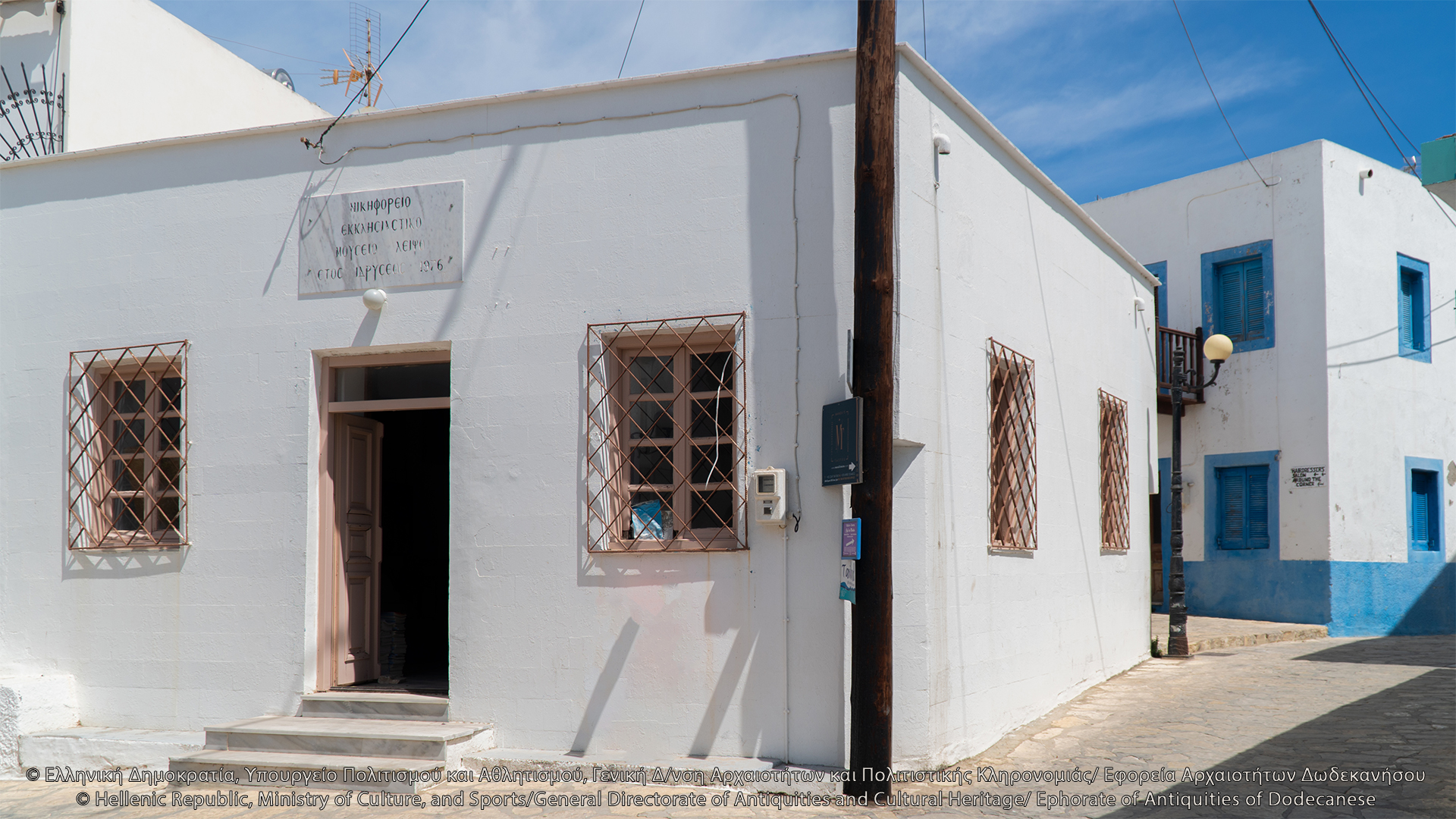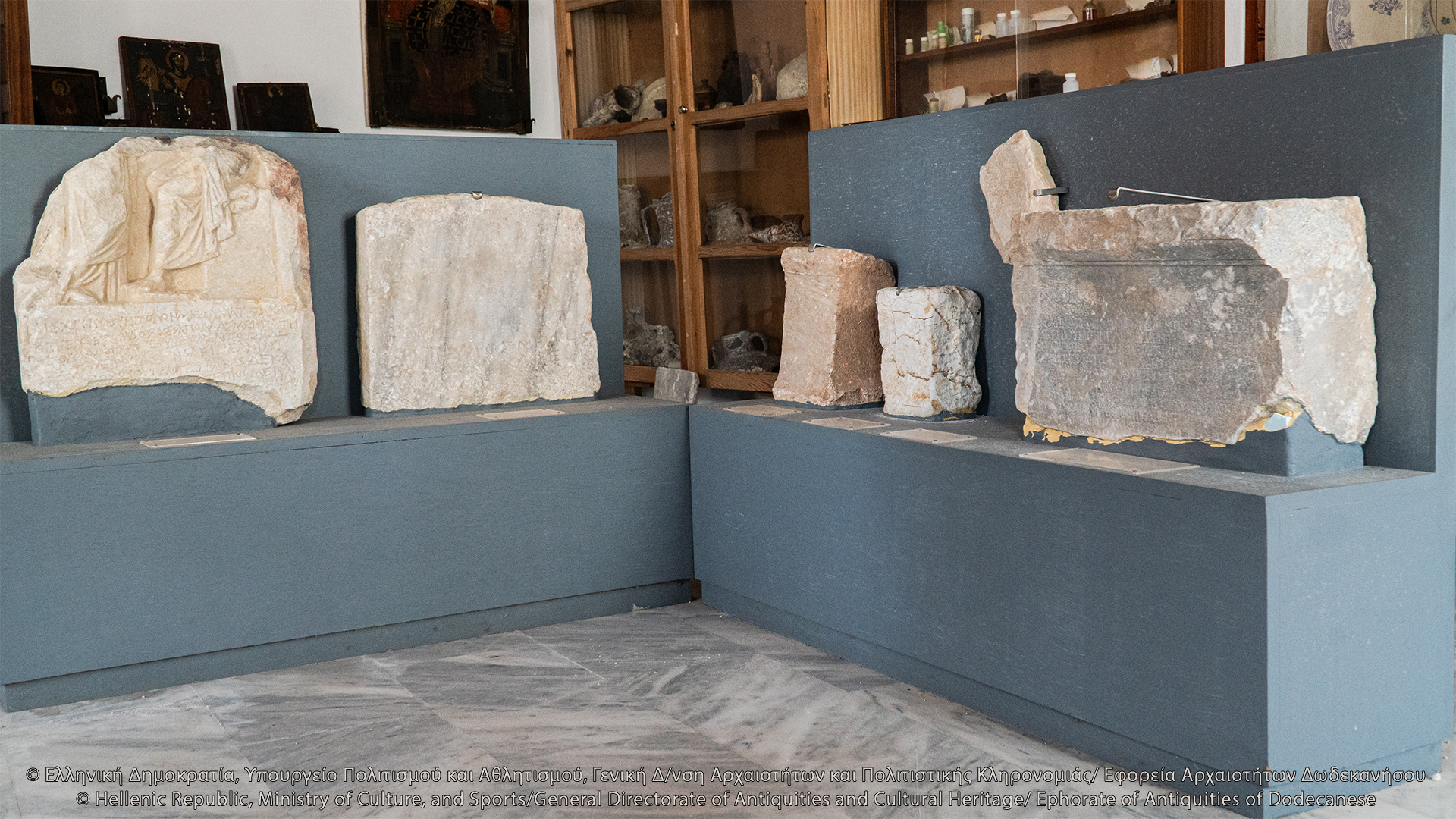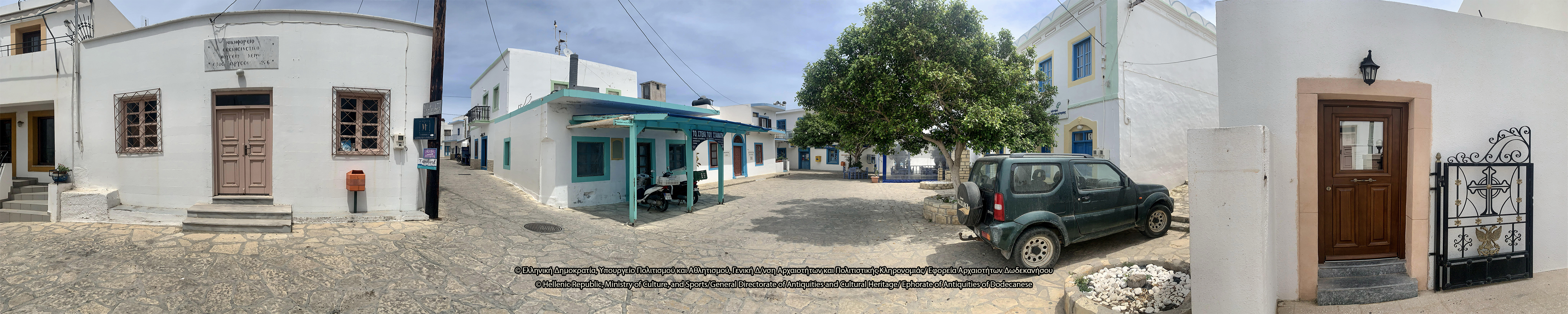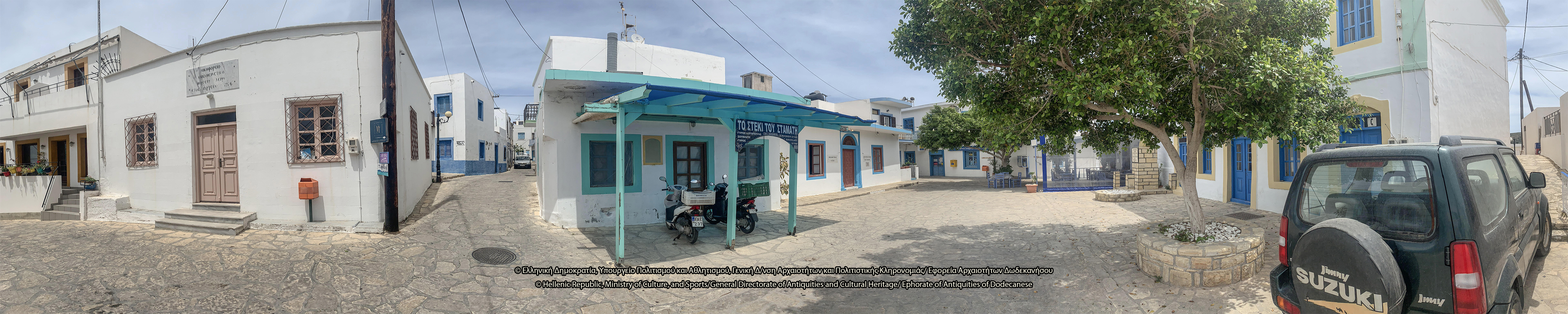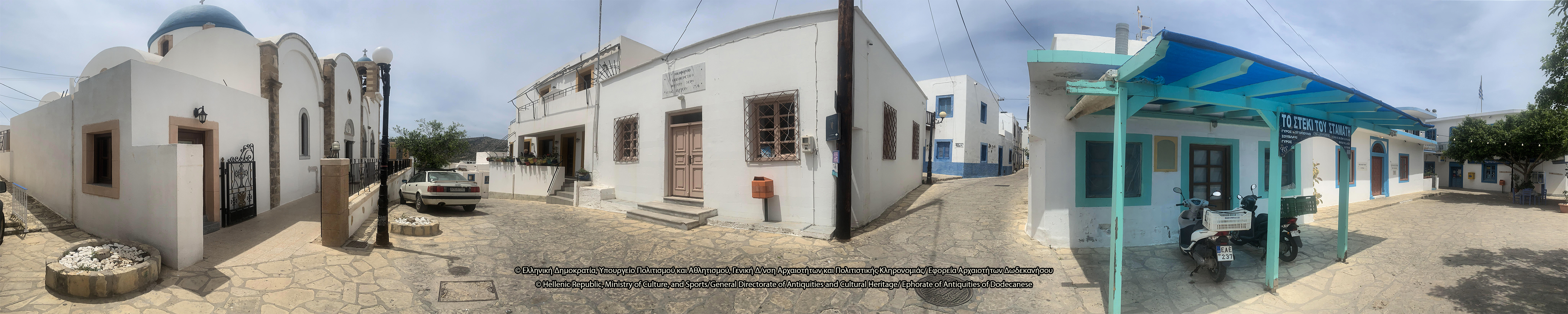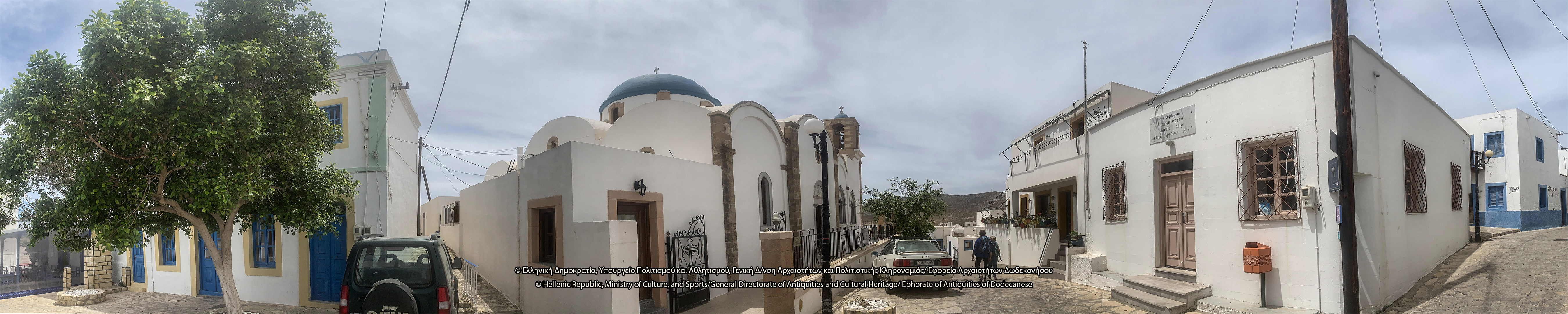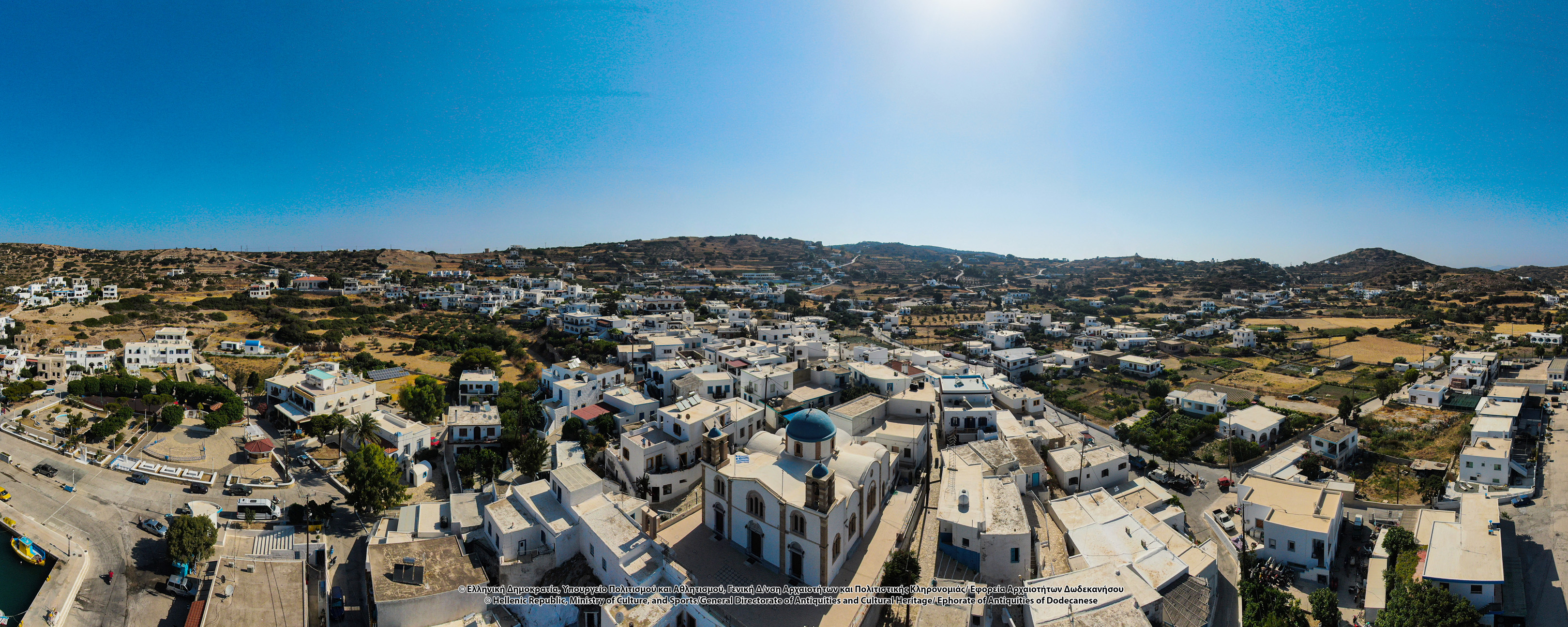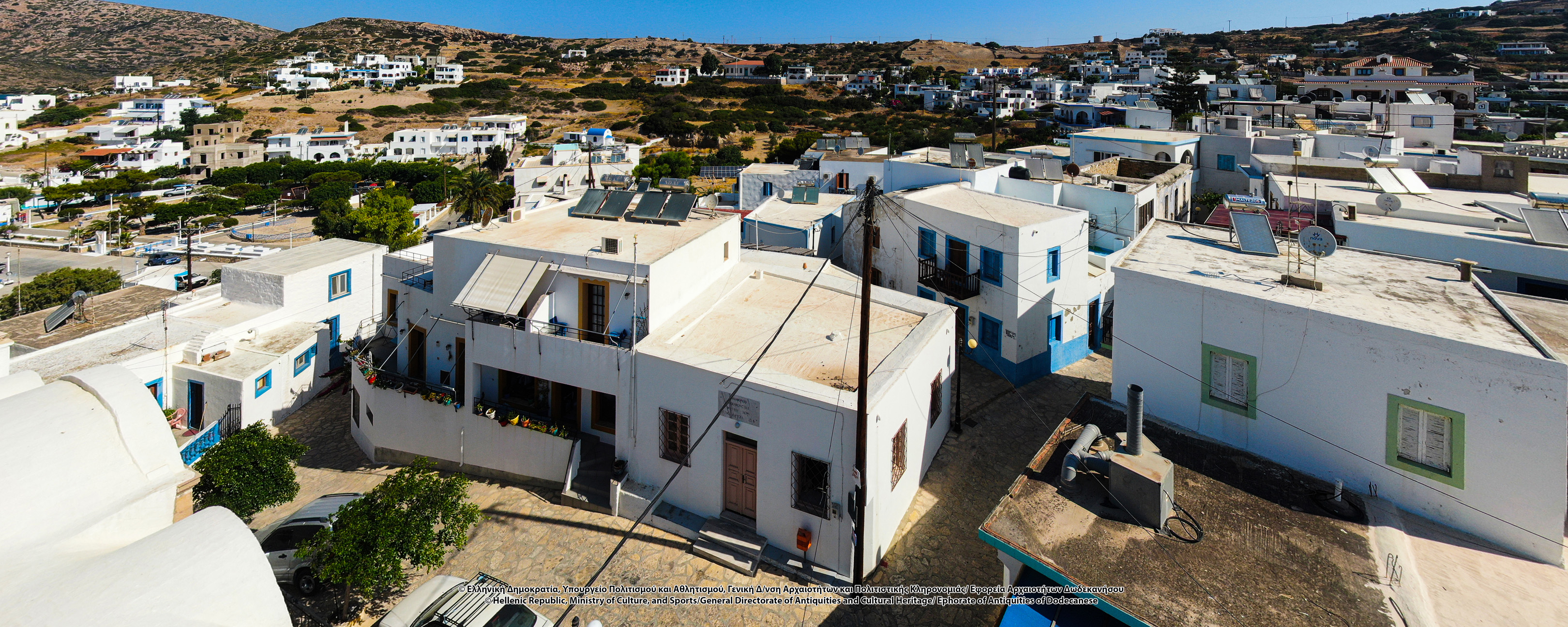
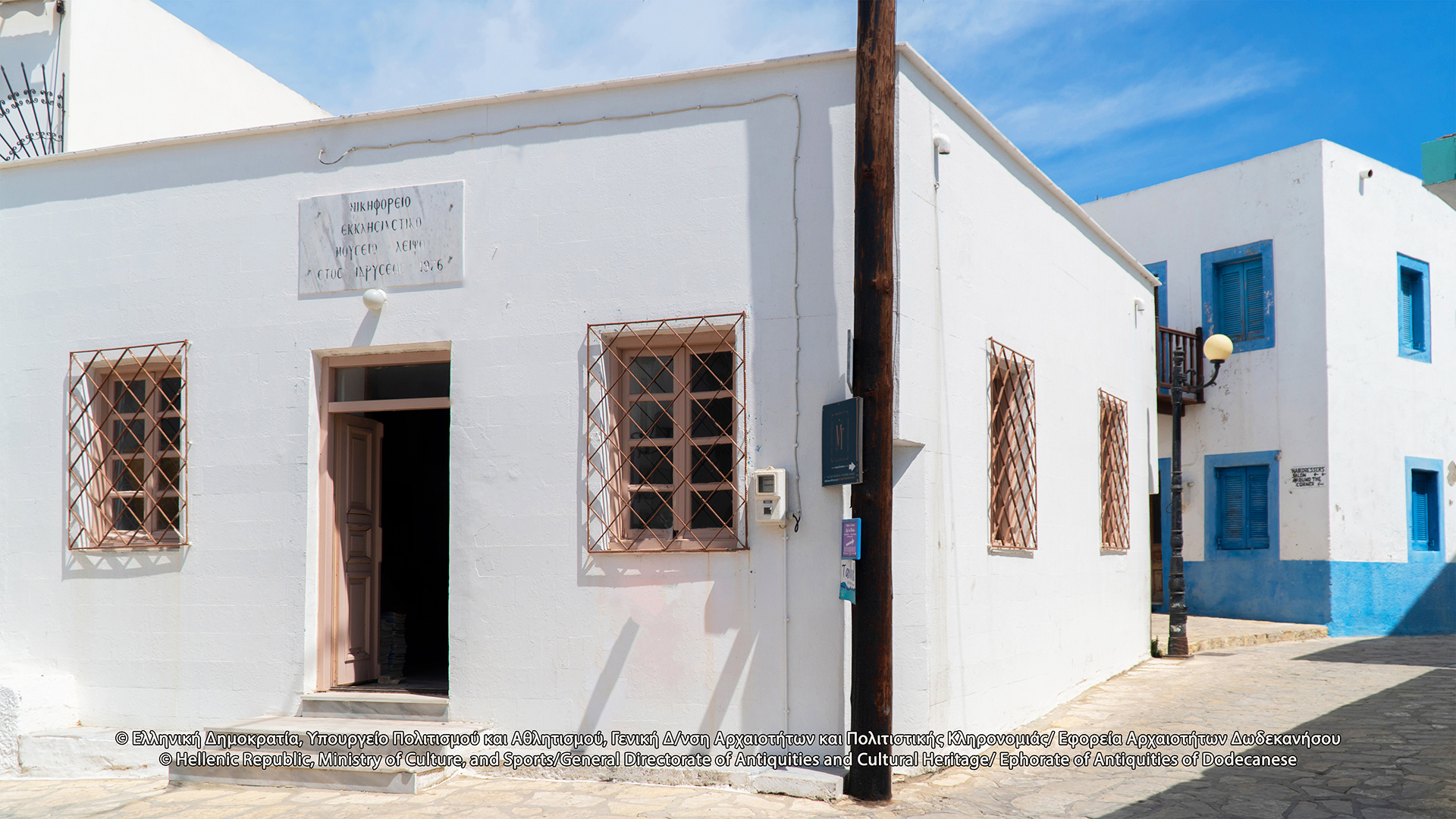
The Ecclesiastical – Folk Art Collection of Lipsi was assembled in 1976 by Lipsiot archimandrite Nikiforos Koumoundouros. It is kept in a ground-floor hall in Emmanuel Xanthou Square at the centre of the settlement, opposite the church of Saint John the Theologian. The archaeological objects in the modest collection range in date from Mycenaean to Early Christian times.
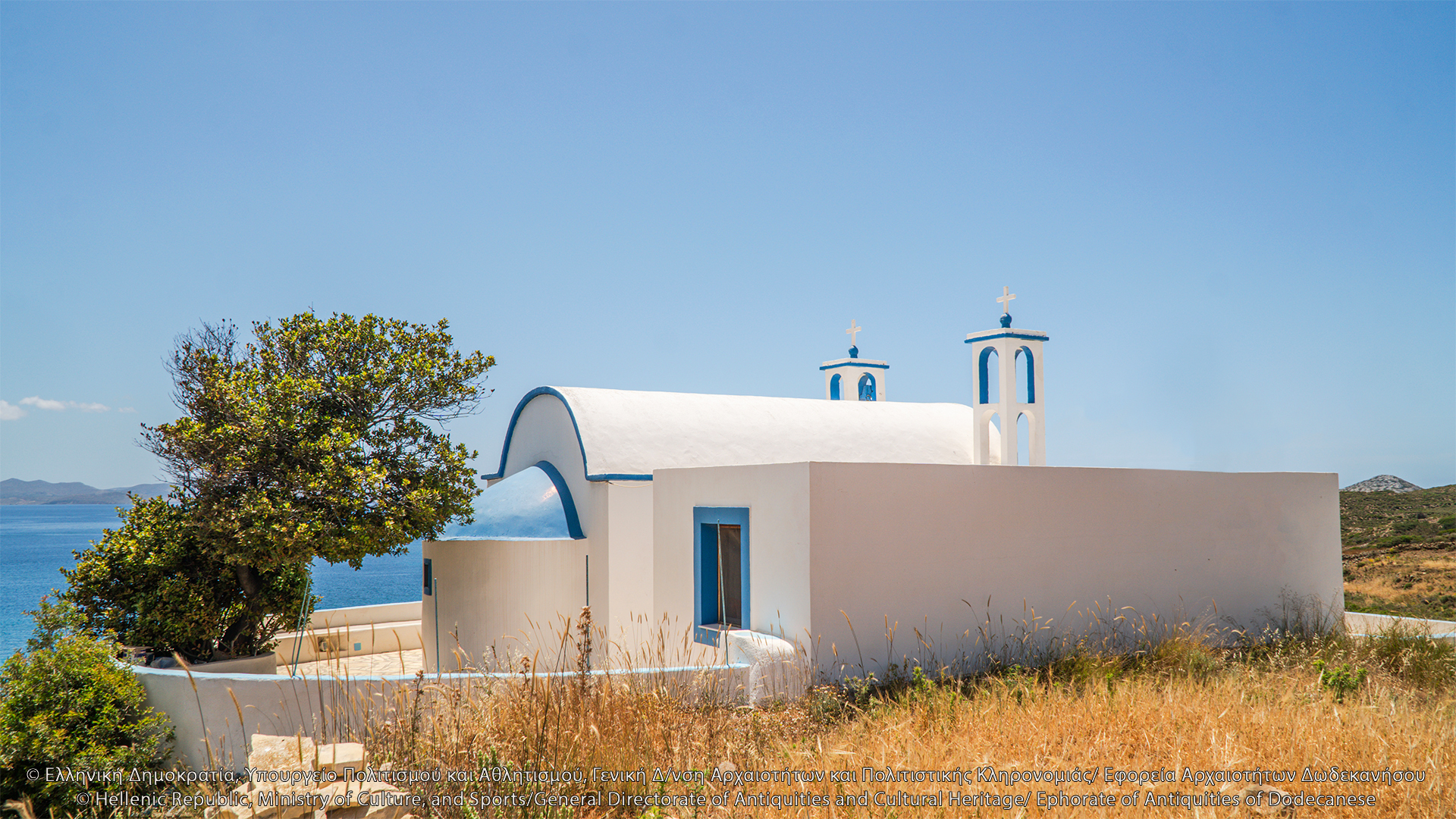
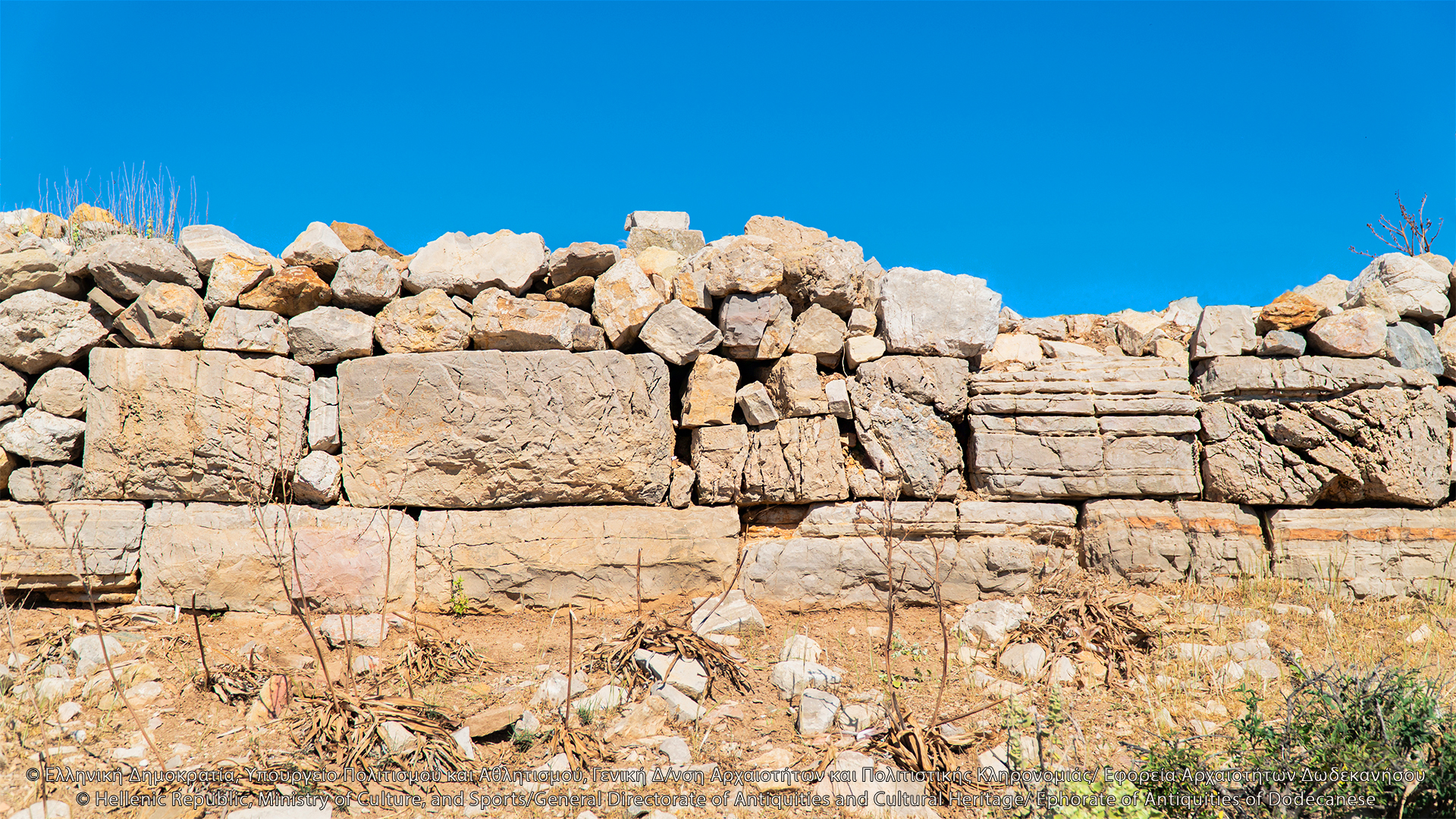
A few chance finds (sporadic pottery fragments and stone tools), provide a faint echo of the prehistory of Lipsi. The oldest traces of human presence on the island during the 4th and 3rd millennium BC have been found in the fortified site of Kastro Hill. They are fragments of unpainted open vessels of coarse clay containing mica and other impurities. Among them is a rim fragment from an open vessel and part of the rim of a bowl. From the same place derive sherds of Late Bronze Age pottery, such as a fragment of an unpainted cylix (shallow drinking cup). The Collection also includes chance finds of prehistoric pottery from the area near the little church of St George and the natural cave of Lientos, located on the northeast side of the eponymous bay, on a rocky hill 100 metres high near the harbour. Obsidian blades and flakes from different parts of the island testify to links with the central Aegean, Milos and the islet of Giali next to Nisyros during the second millennium BC.
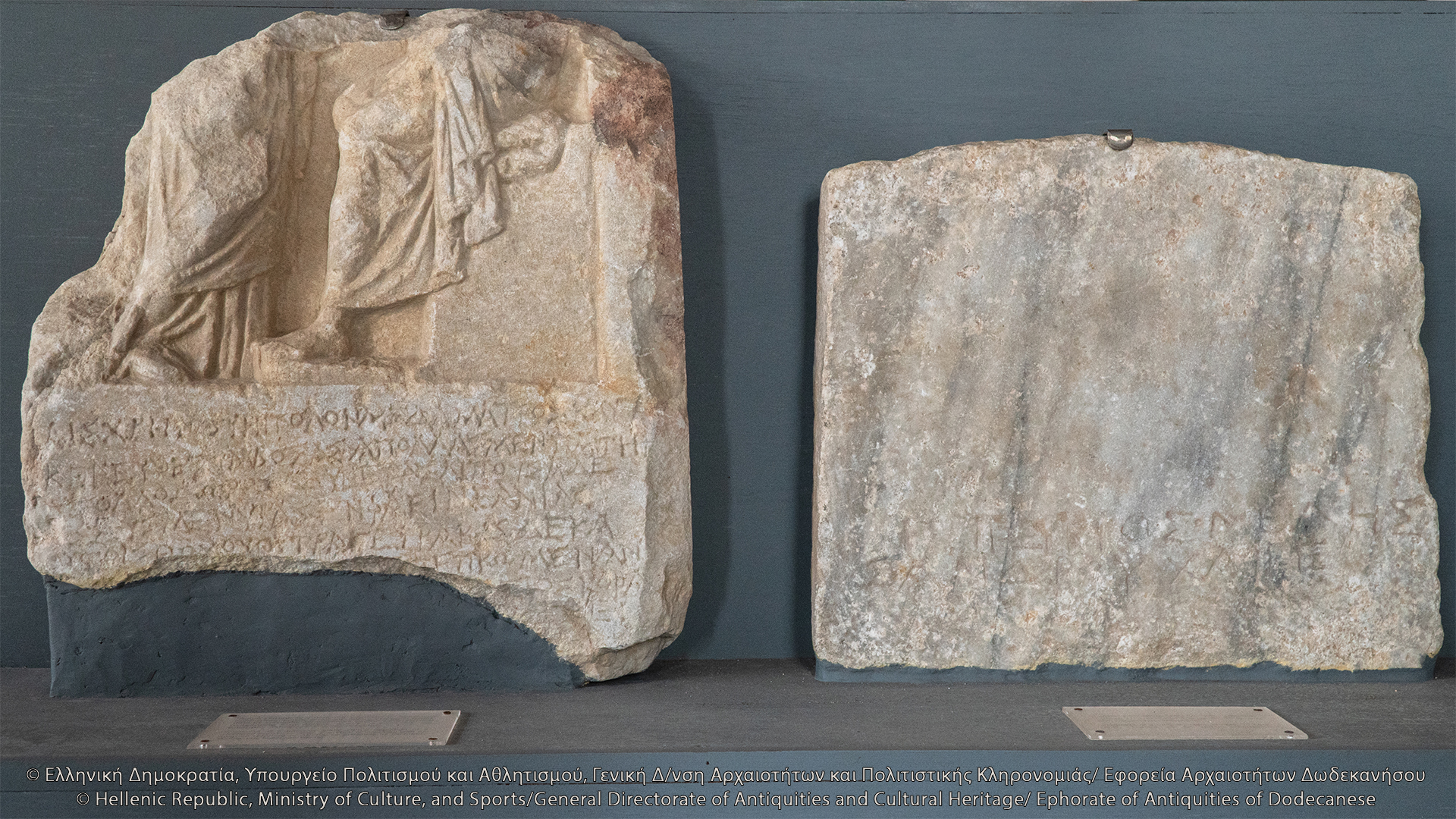
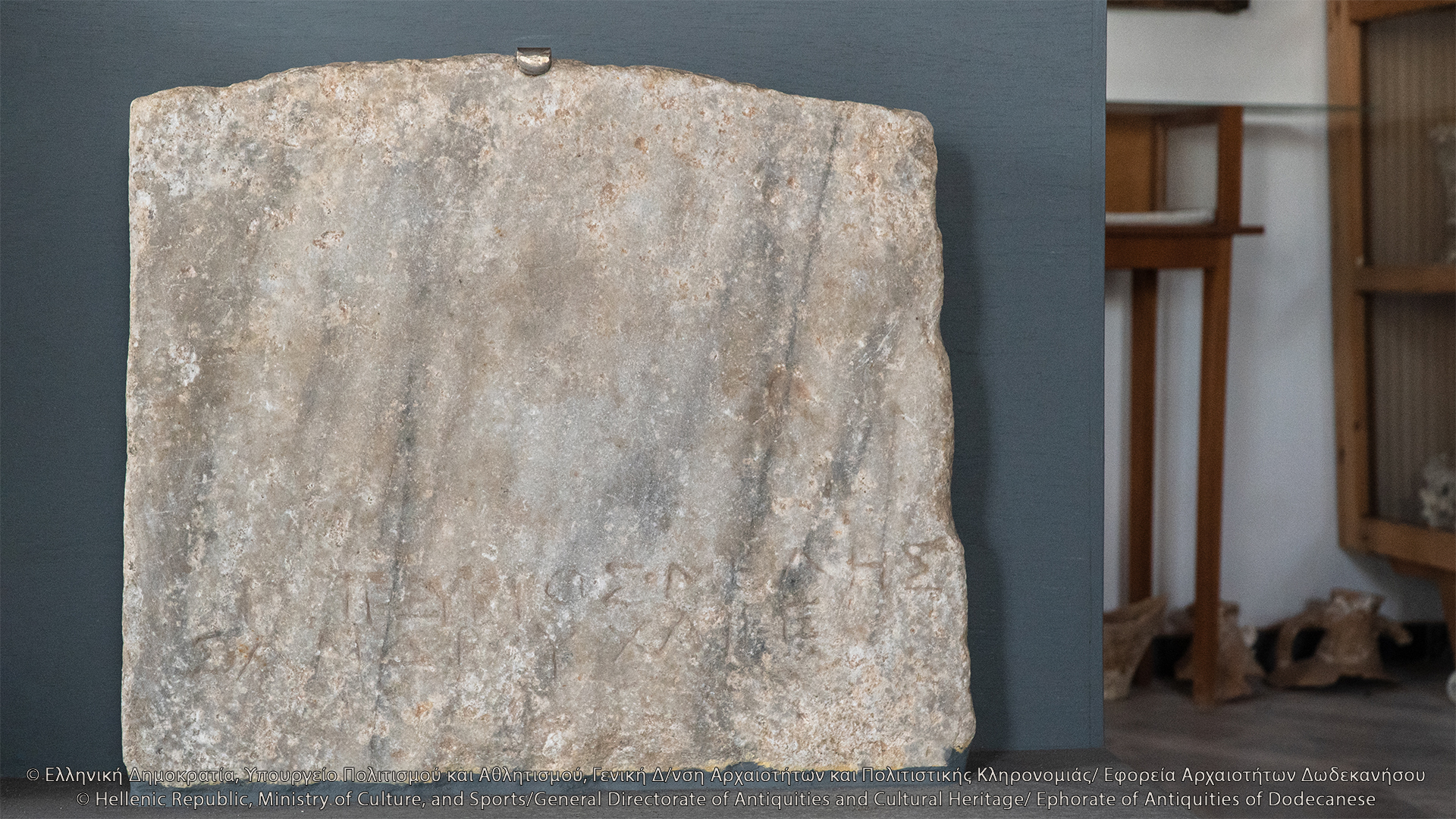
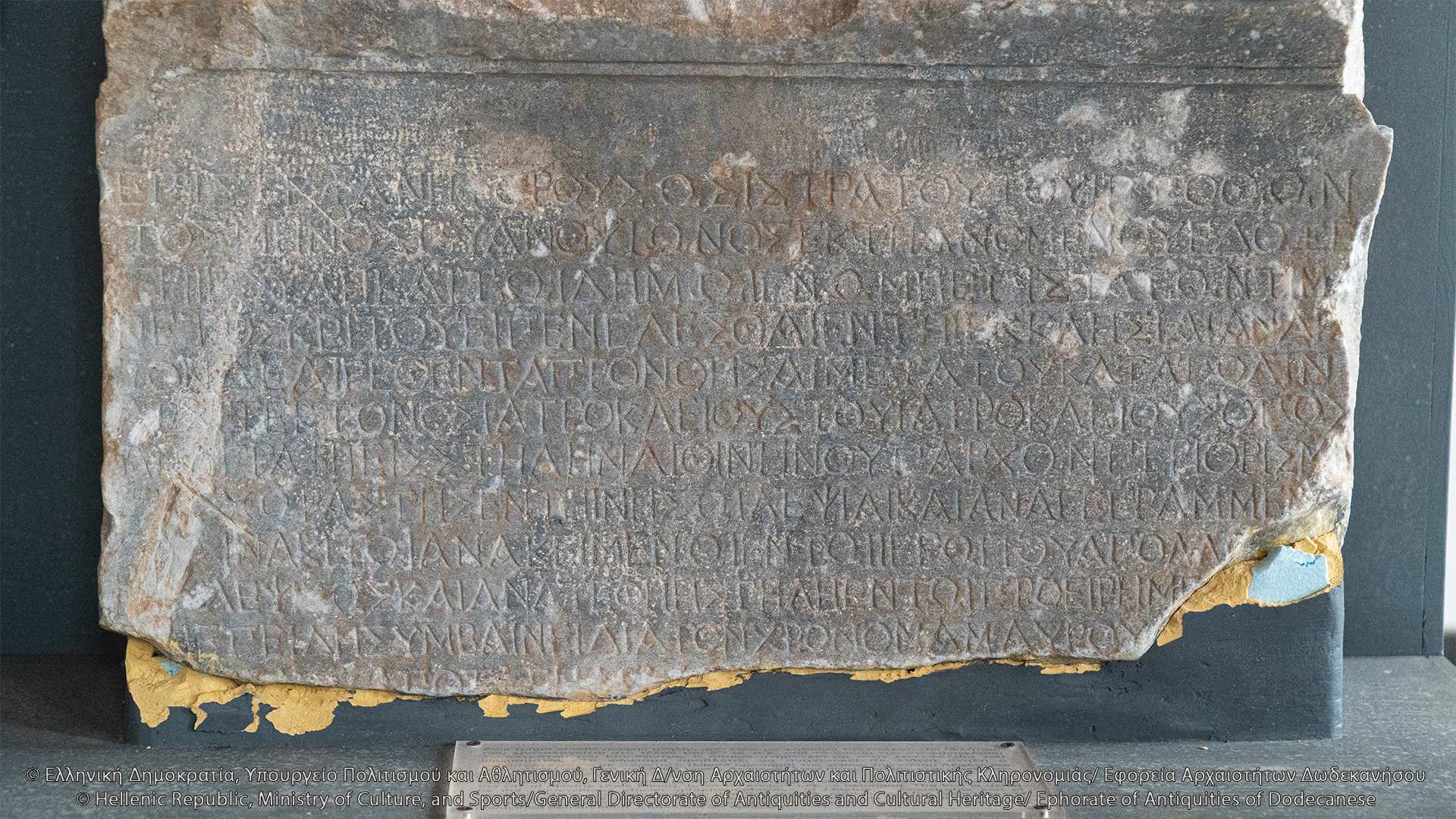
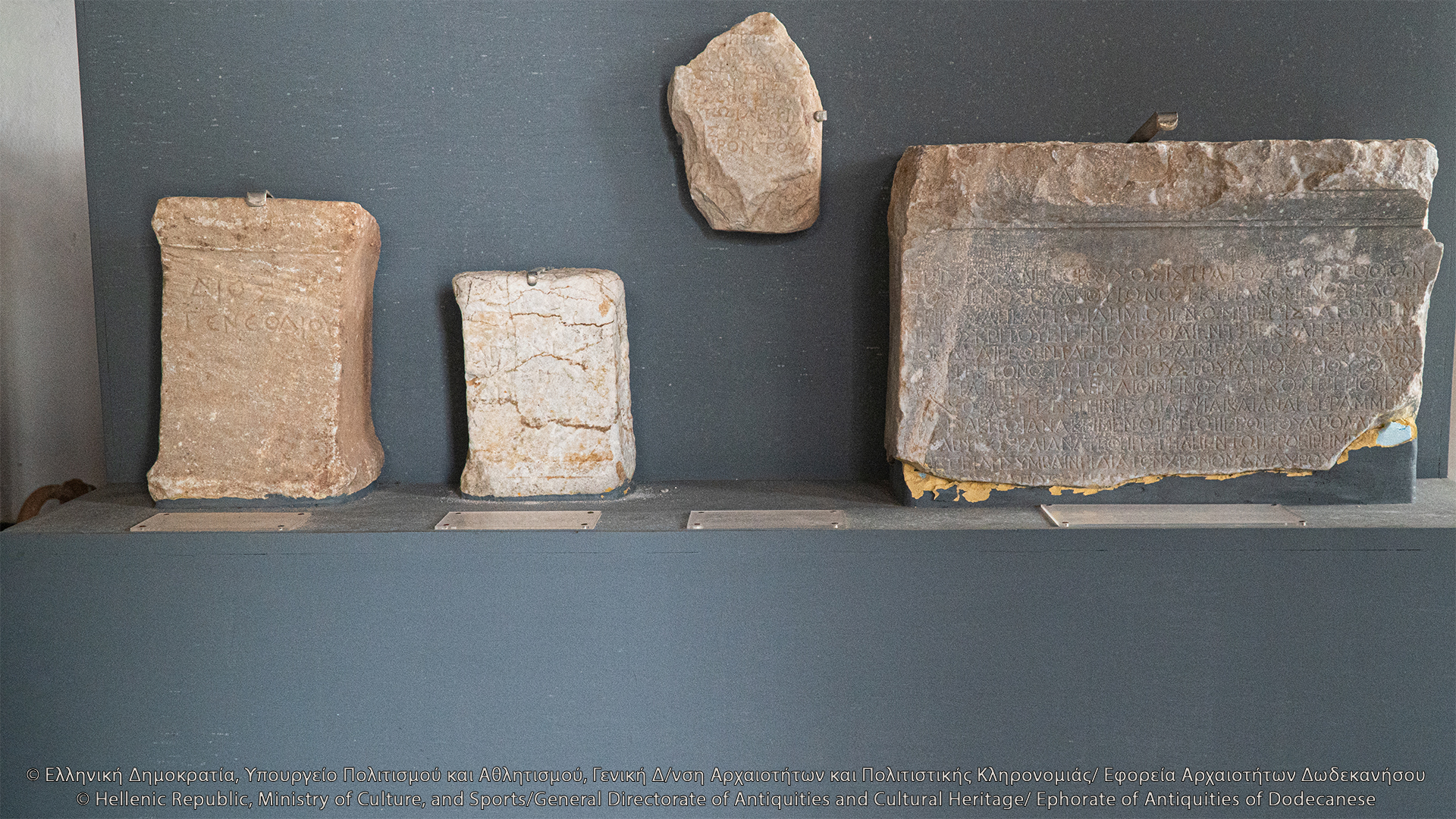
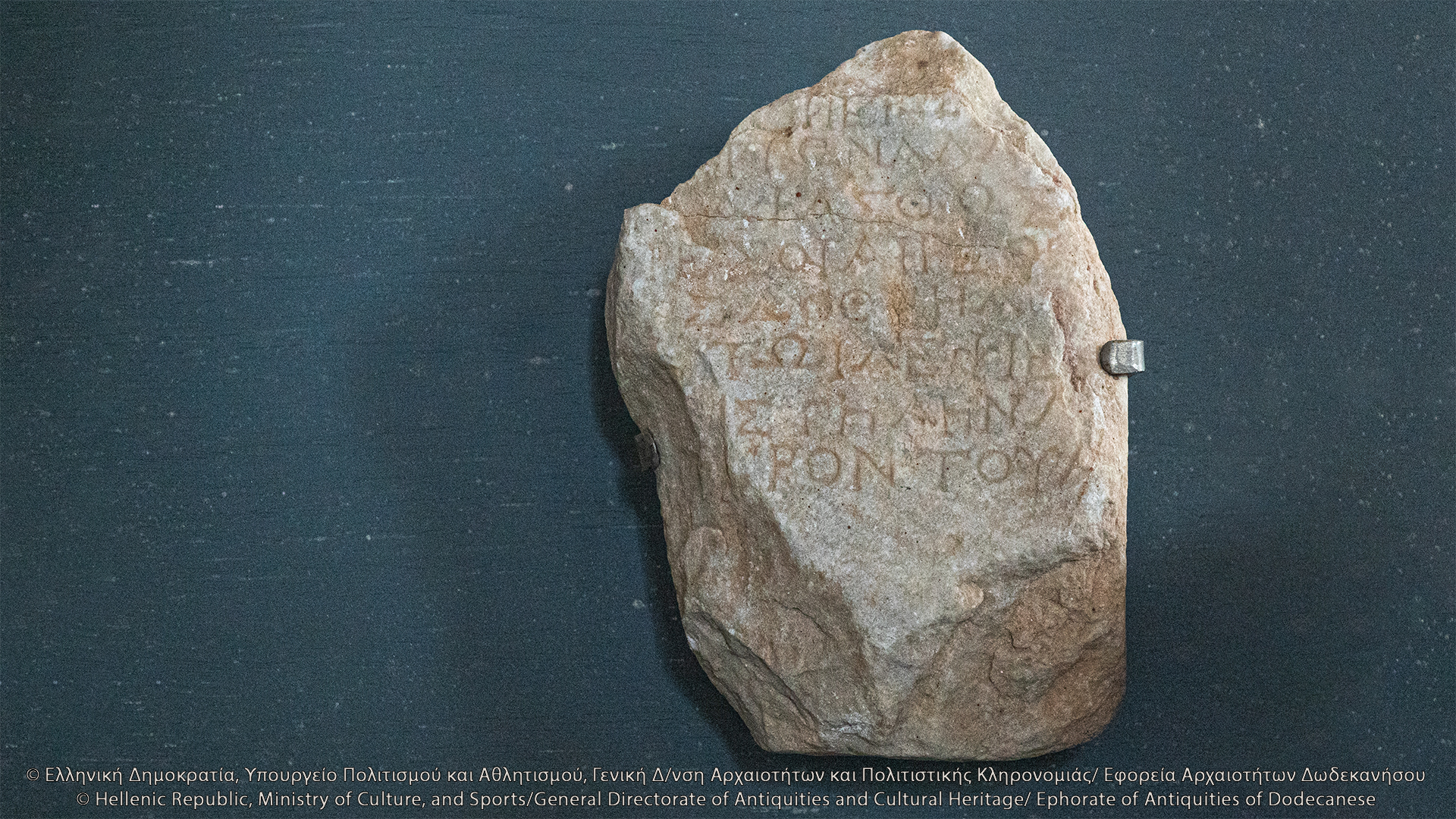
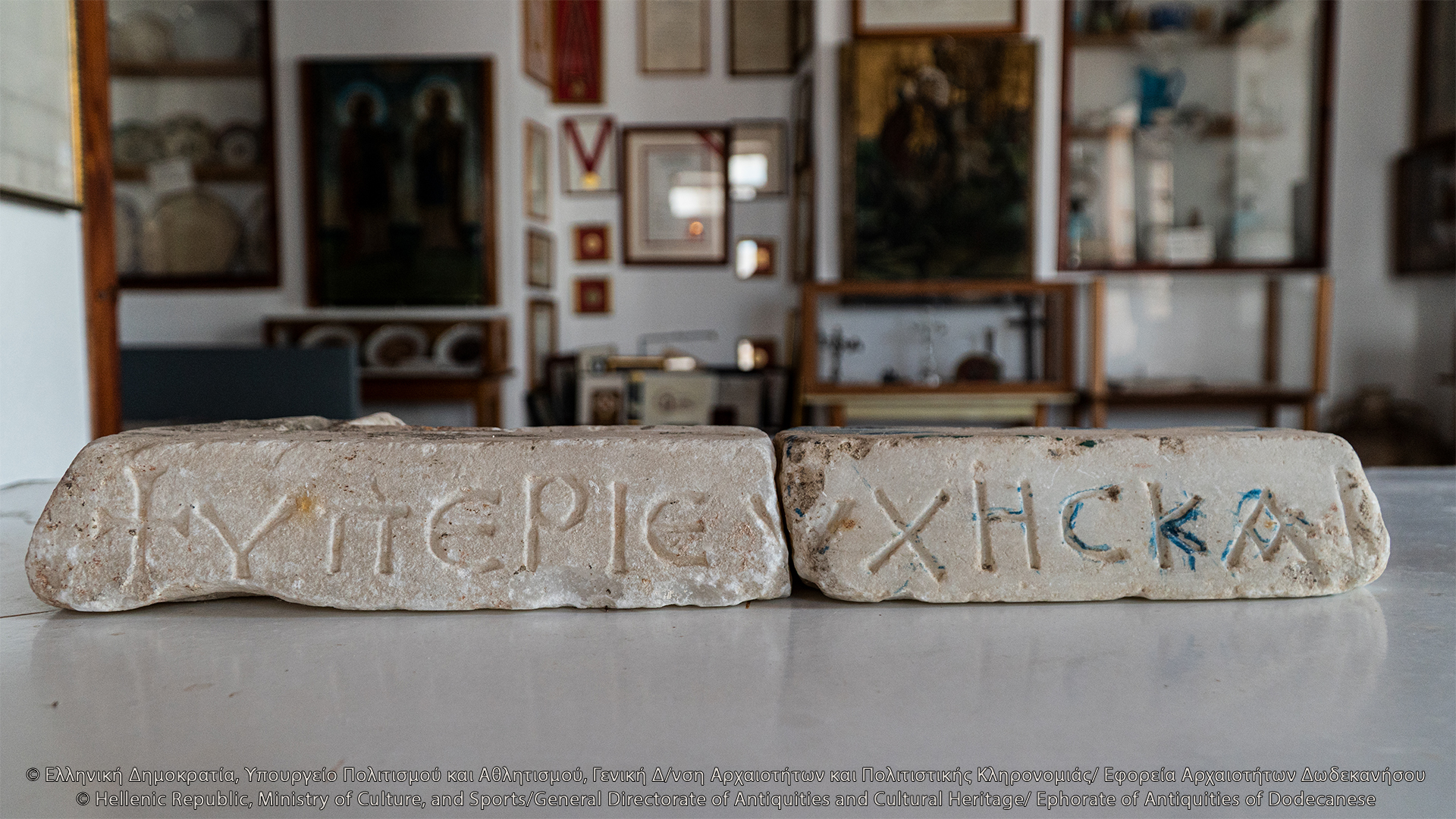
Important inscriptions are also kept in the Nikiforio Museum. Among them are a decree of the Milesians “inhabiting Lepsia” and another “of the citizens [of] Lepsia” (2nd century BC) with information on the political situation on the island, local authorities and officials. Another resolution from Lipsi, dating from the end of the 2nd c. BC, concerns the boundaries of the sanctuary of Apollo Lepsieus. Another resolution regulates the implementation of the decisions of the assembly (boulé) and demos of Miletus regarding Lepsia.
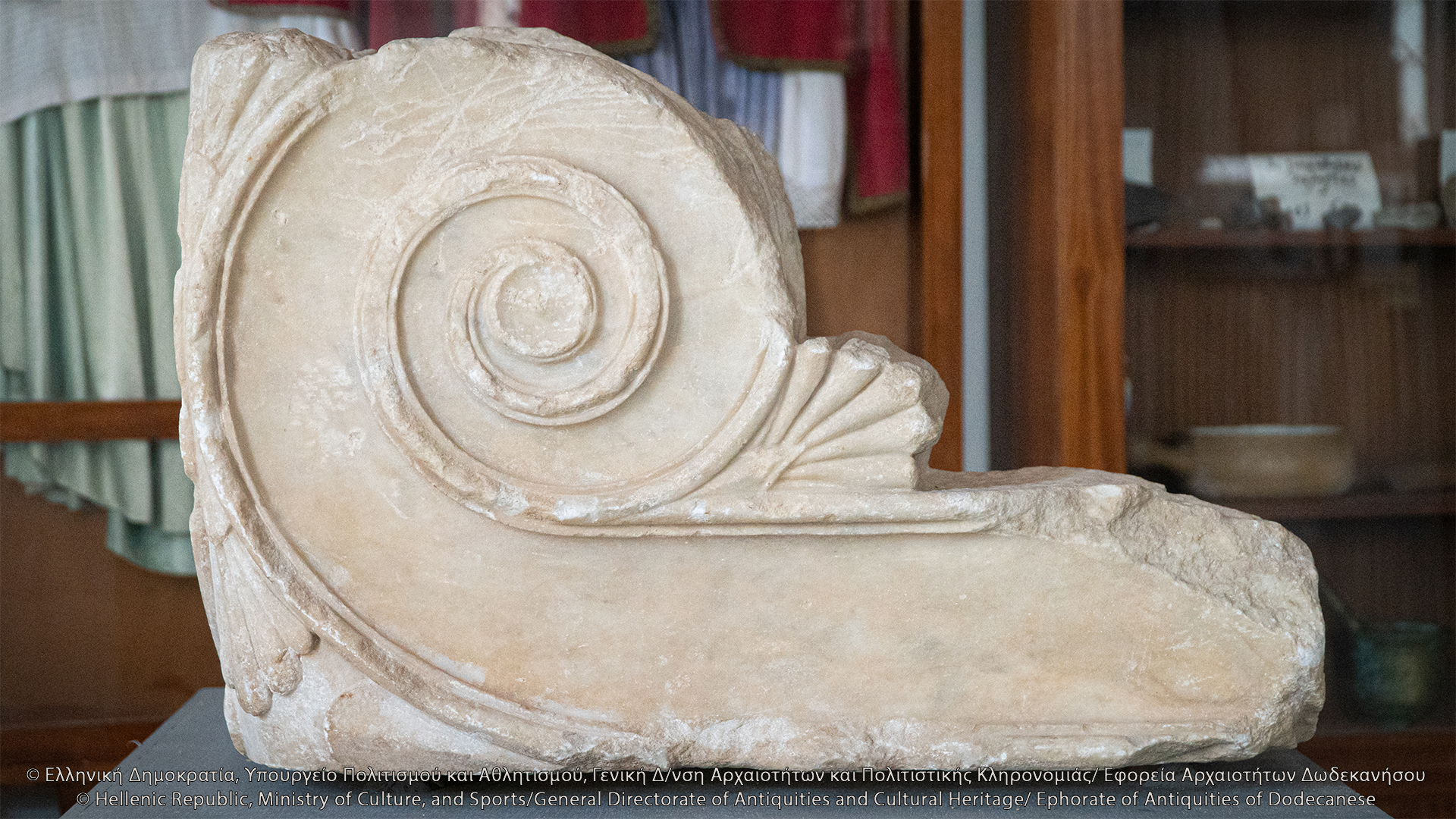
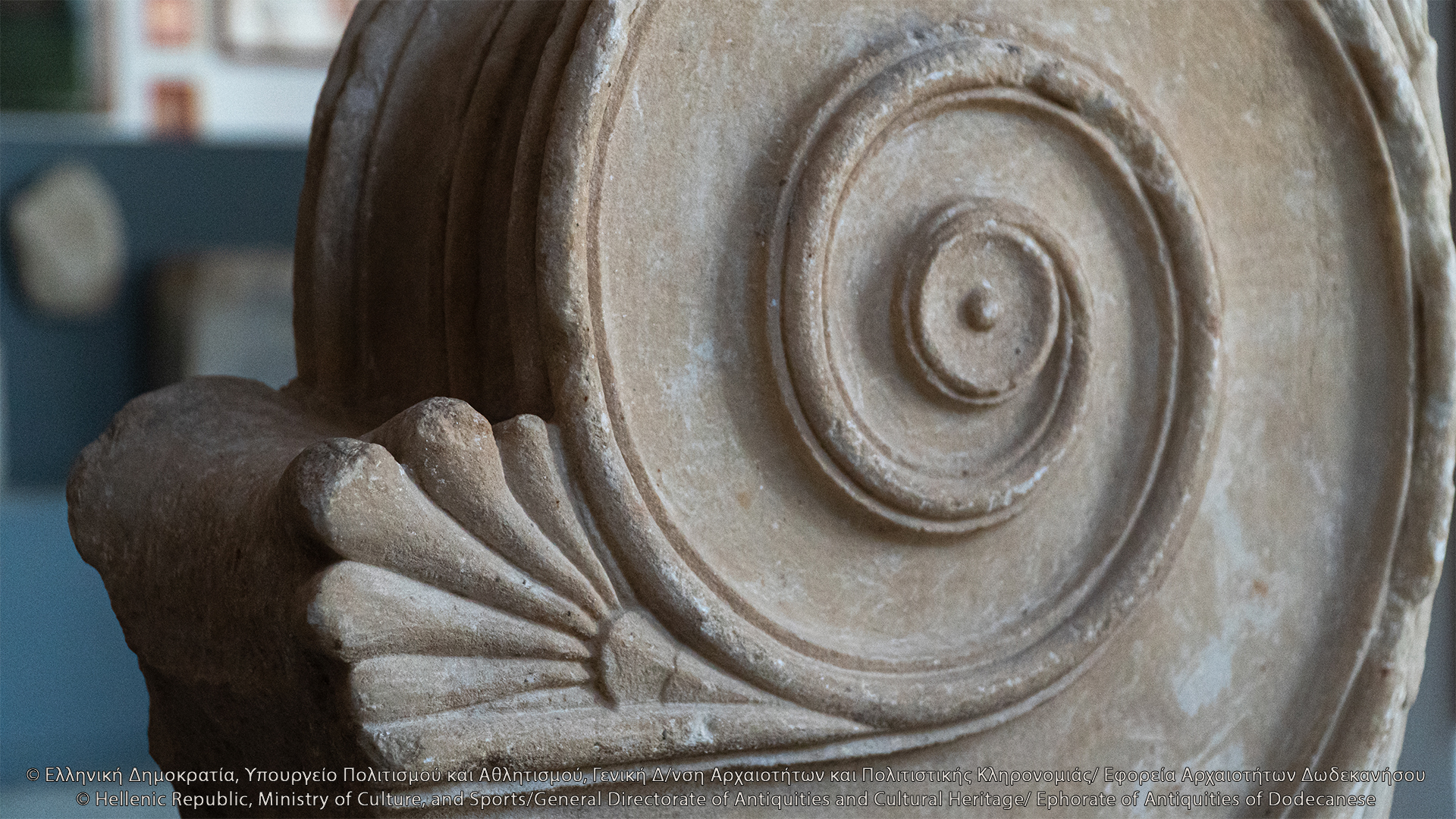
According to historian Giacomo Manganaro, the altar of Artemis Soteira found in the island’s citadel, is probably the votive offering of one of the servants in the fortress of Lipsi who spoke Doric Greek. The beautiful Milesian corner akroterion of pure white marble, found in Lipsi and displayed in the Nikiforio Museum probably came from the altar of the sanctuary of Apollo Lepsieus, according to archaeologist Tasia Dreliosi-Herakleidou; it is a particularly fine example of architectural decoration with elegant spirals and shapely palmettes. Unless it came from elsewhere -a similar example has been found in Patmos- this would be part of the decoration of the altar of Apollo Lepsieus, probably modelled on the monumental altar of Poseidon at Cape Monodendri, in the coast of Asia Minor opposite Lipsi, or similar altars in the Milesian mainland.
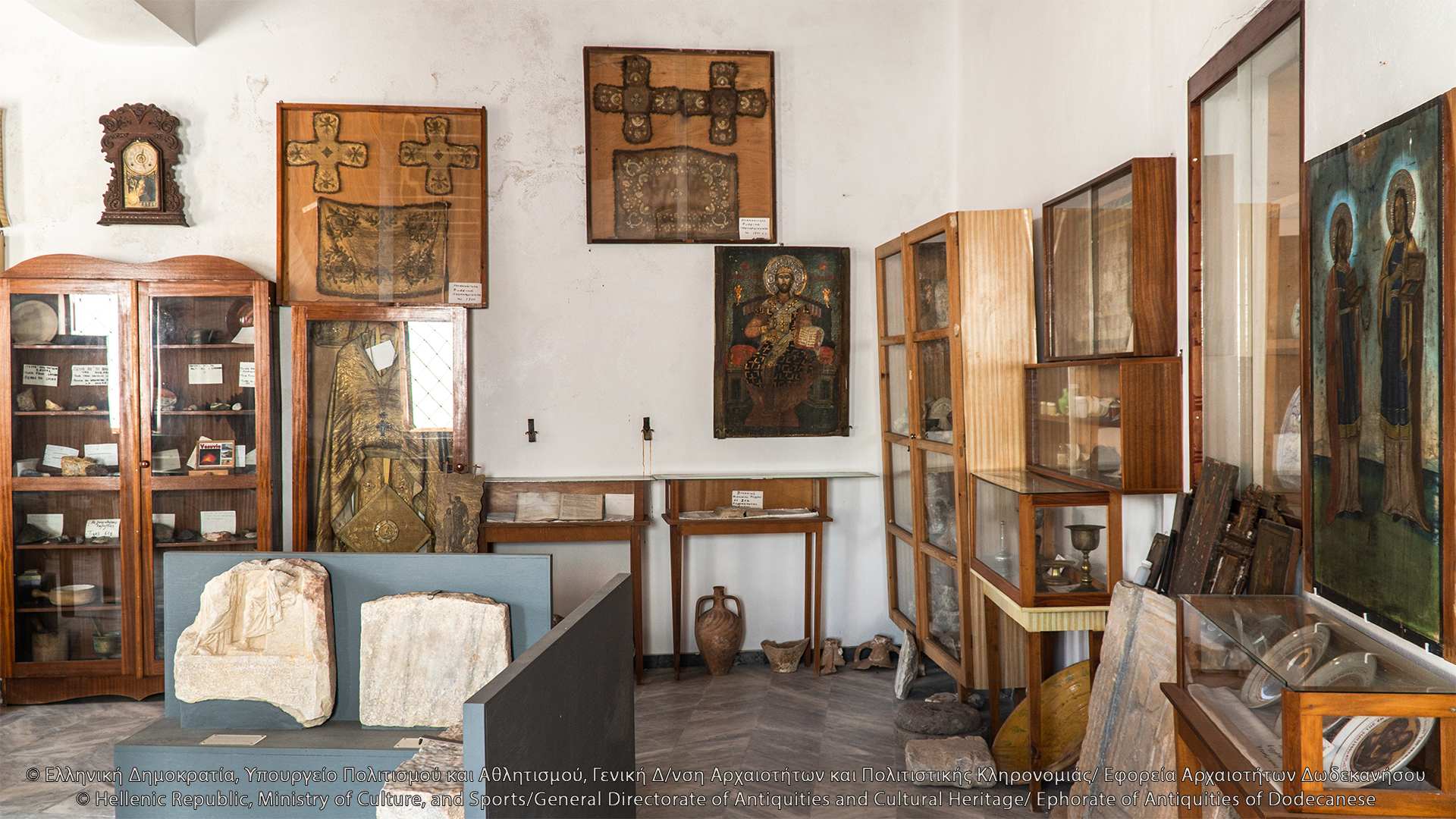
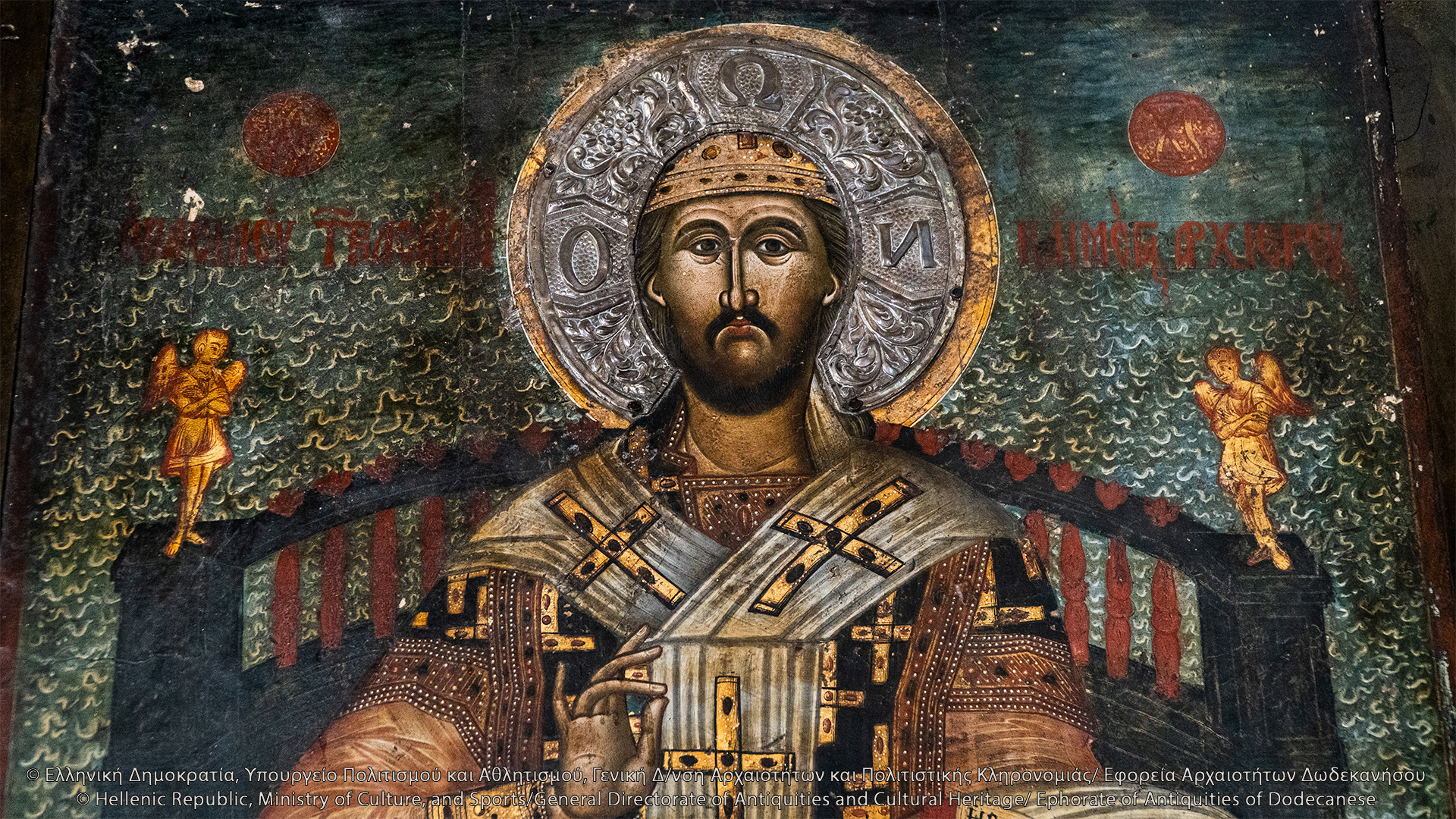
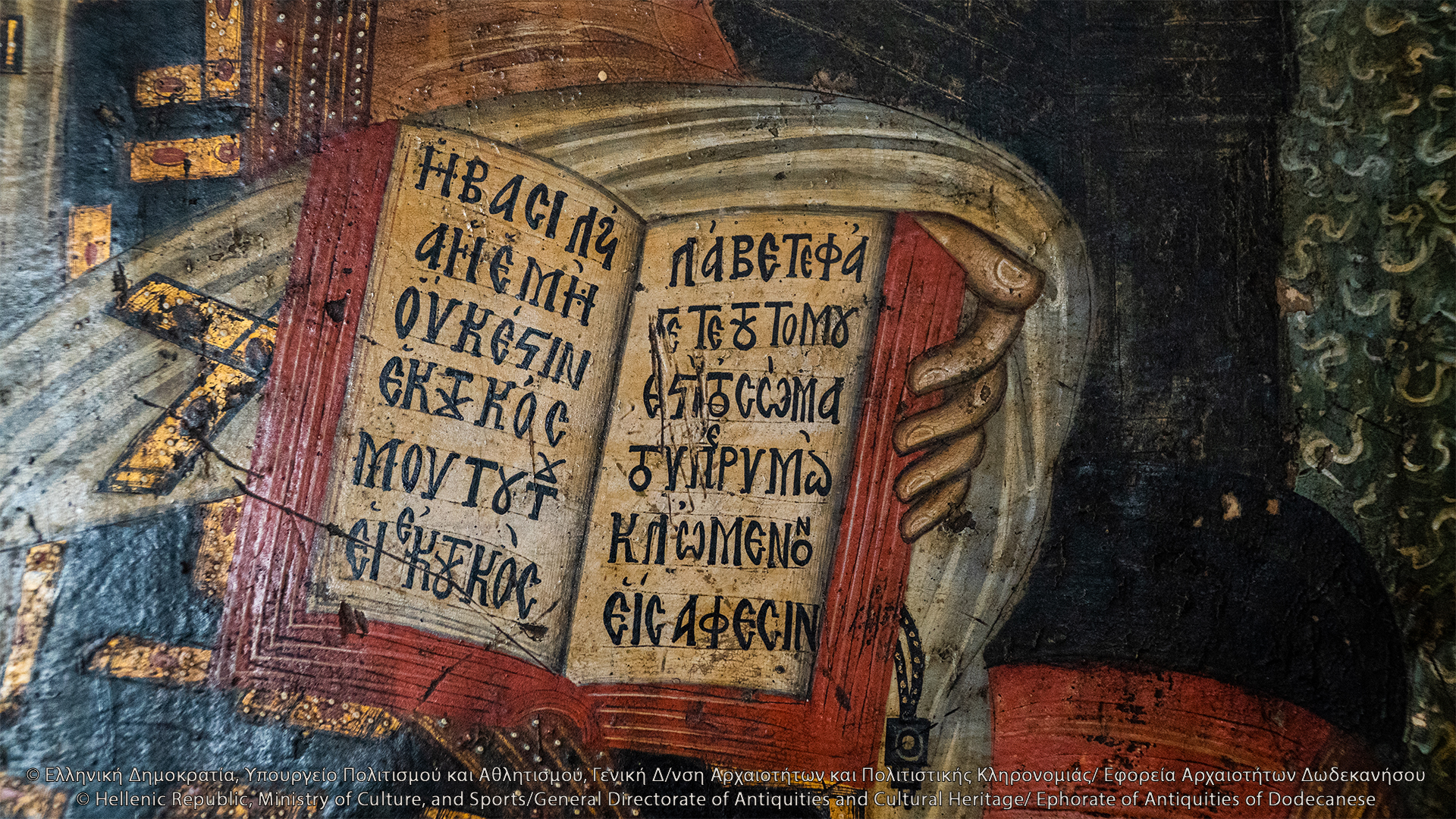
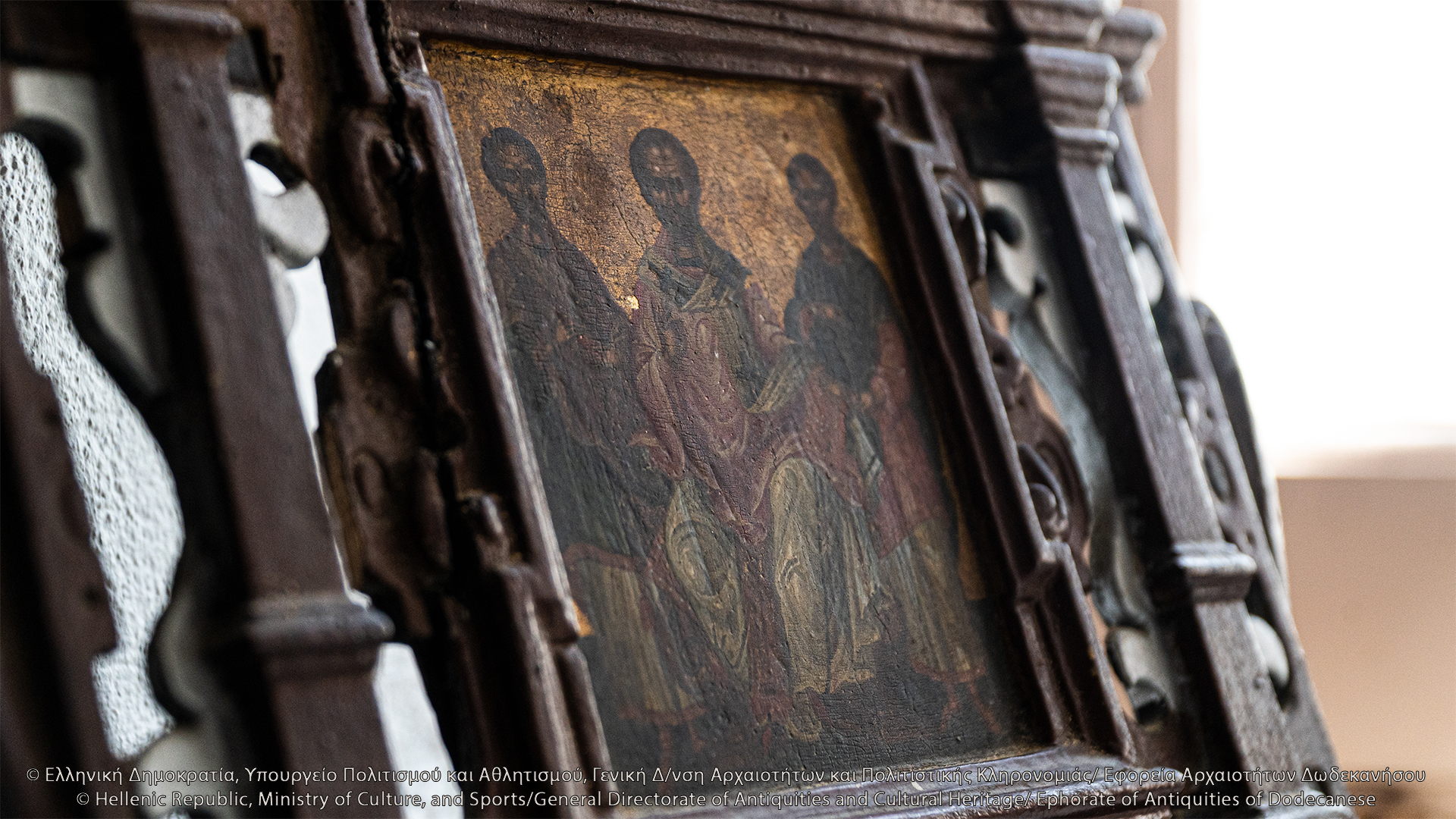
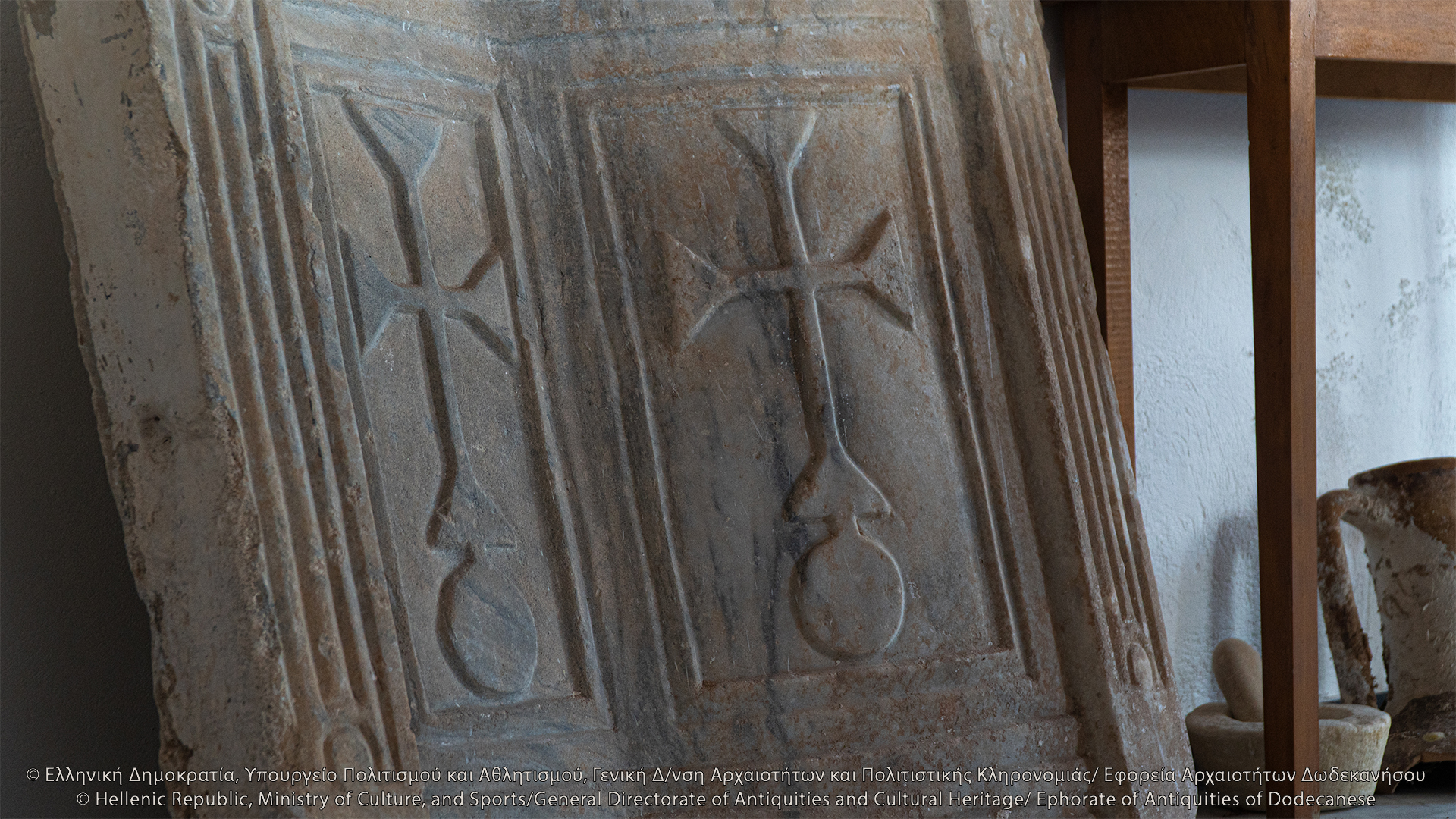
Exhibits from the Christian era include lamps, three 40-nummus copper coins, Early Christian amphorae from shipwrecks, as well as several architectural sculptures, most brought from the Panagia at Kouselio (fragments of a marble sanctuary screen panel with mouldings and a unequal cross, the foot of a water basin, a section from a round column, the side of a pulpit and an Early Christian church altar). Also, ritual objects of high quality such as icons of the 16th-17th century, crosses, vestments, gold-embroidered chalice covers, a stole, manuscripts and incunabula. The collection is complemented by items of local folk culture, costumes and household utensils, wood carvings, embroidery, textiles and other handicrafts.
Disabled access:
Yes
Opening hours:
By arrangement
Entry fees:
Free