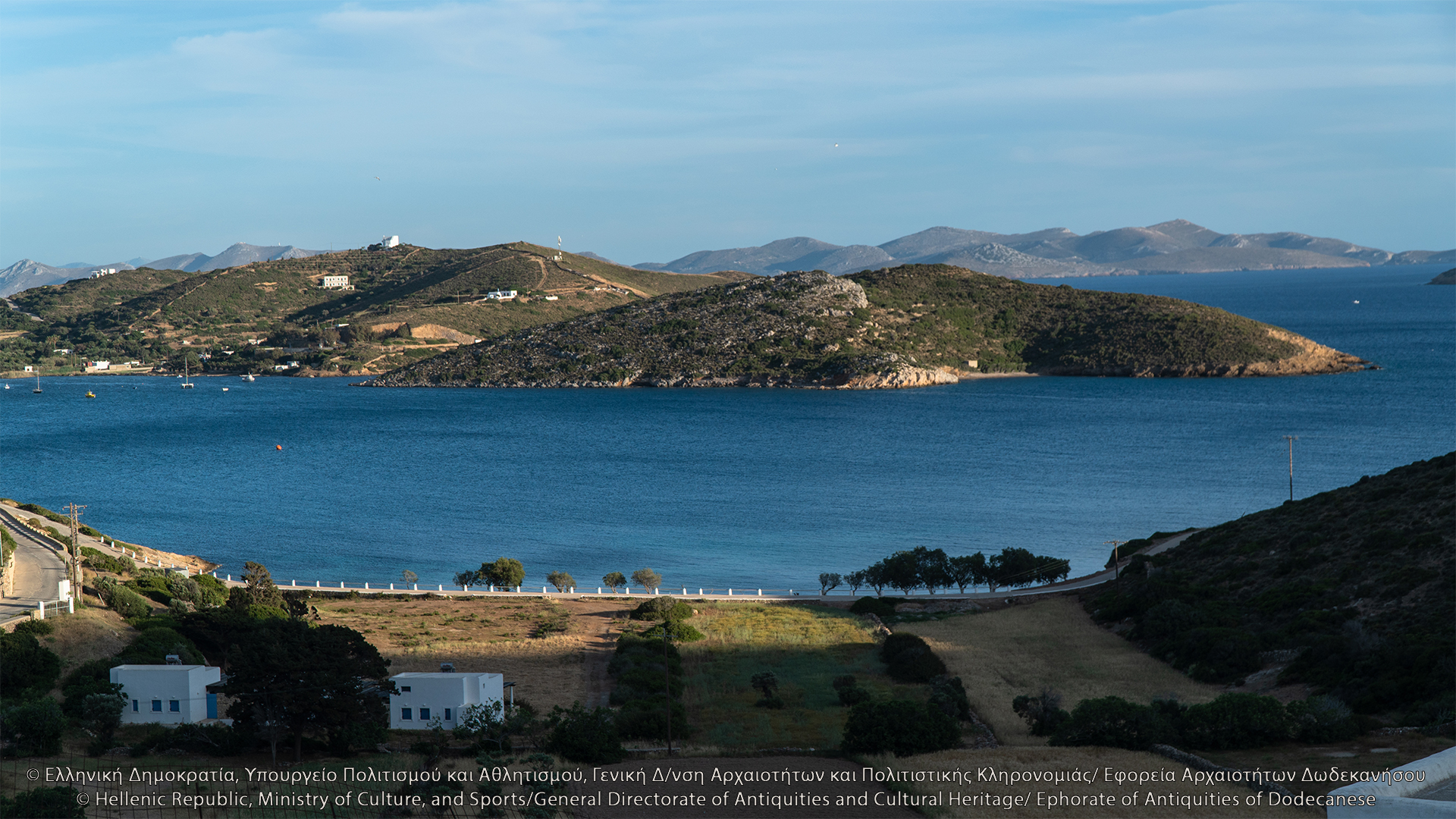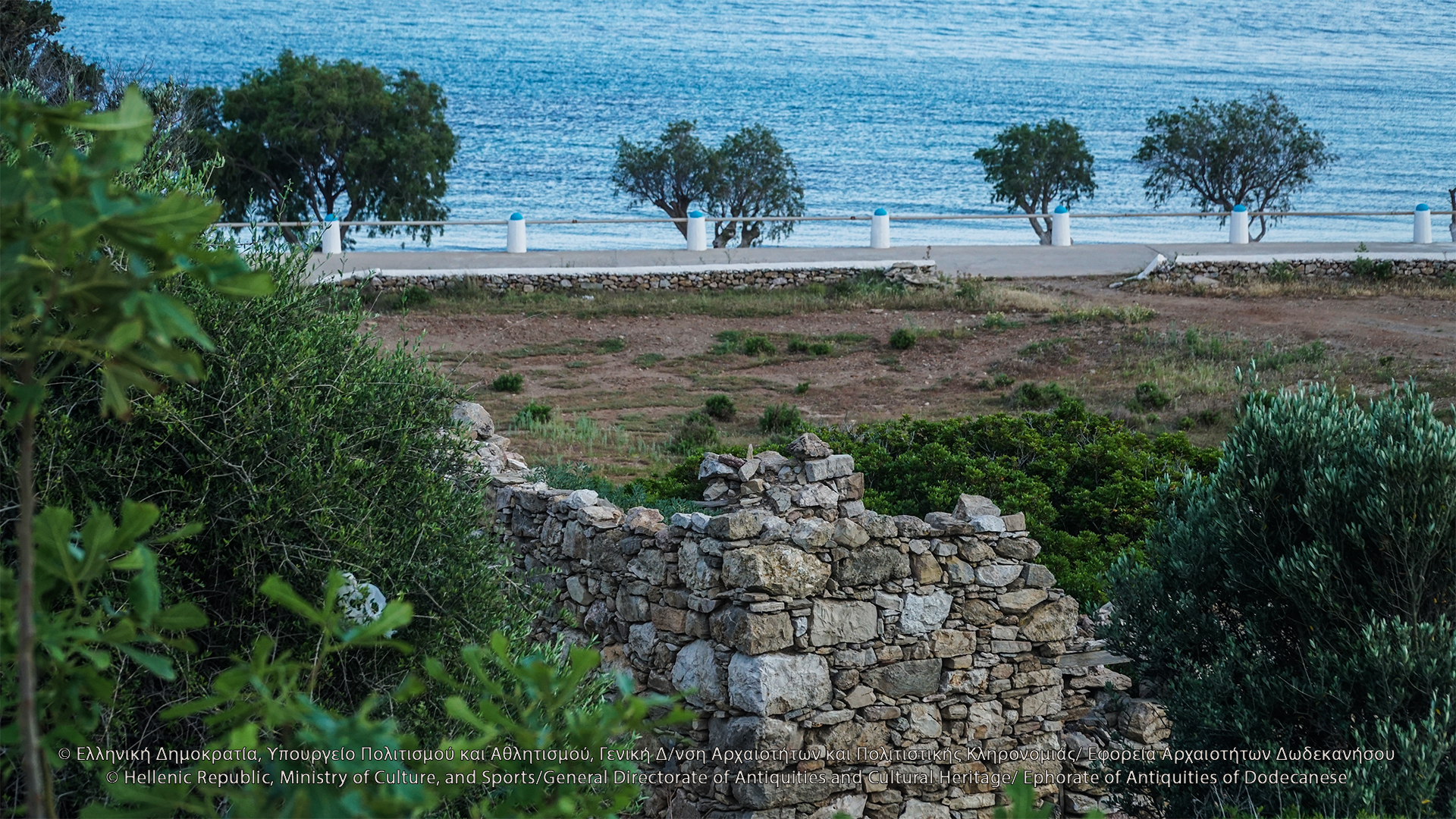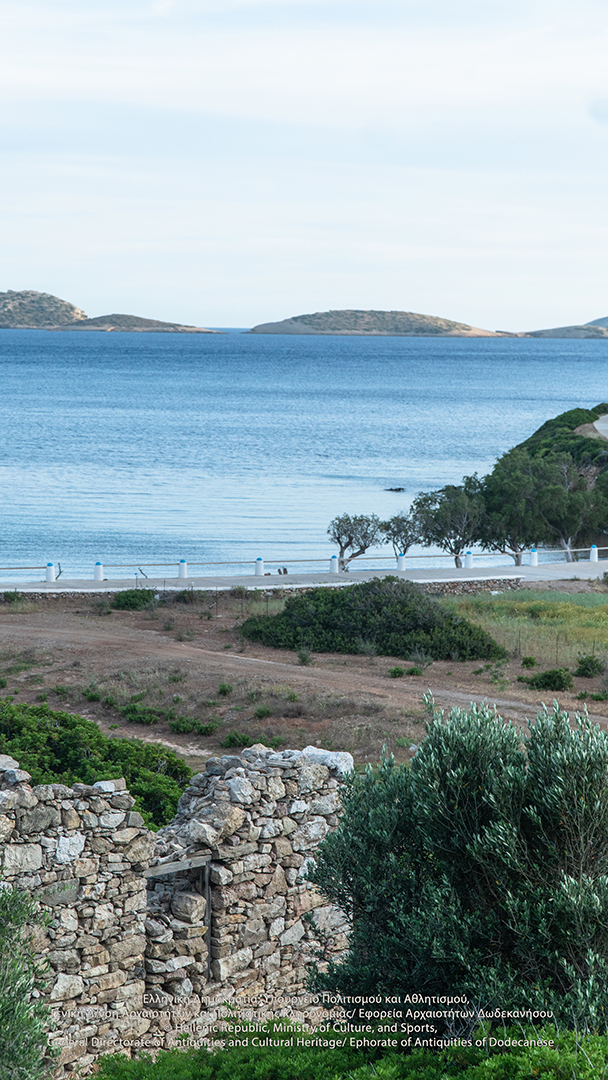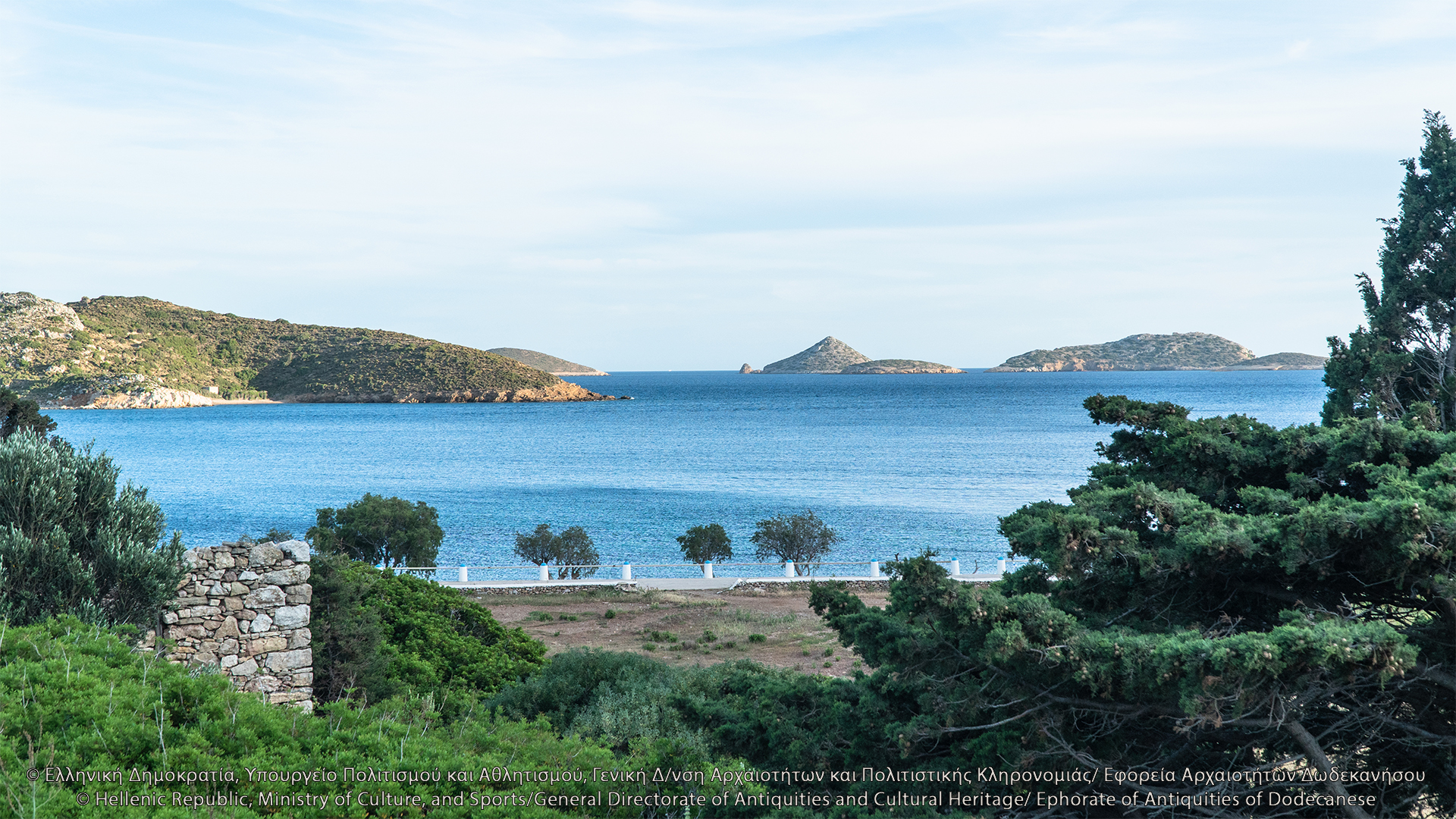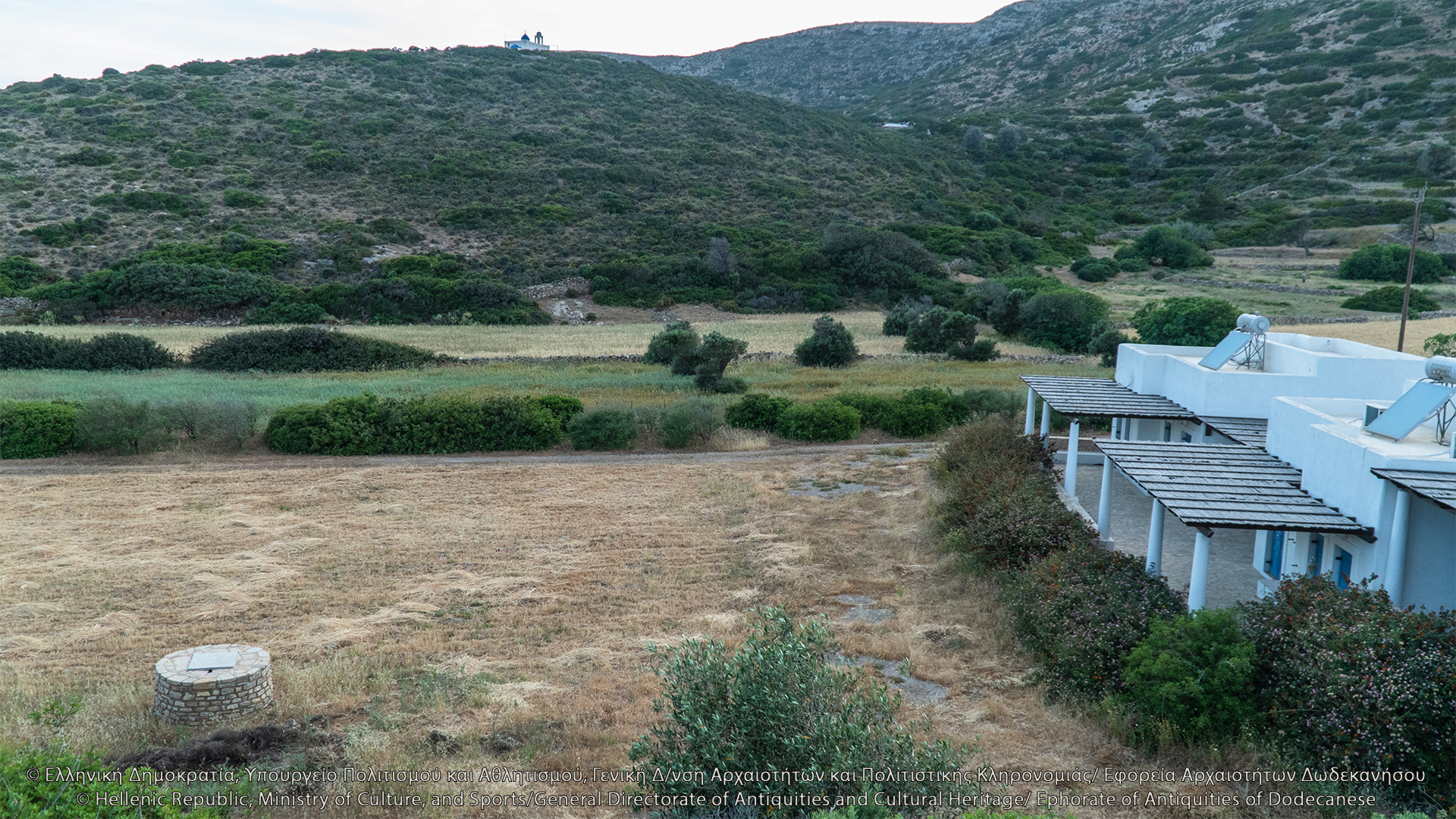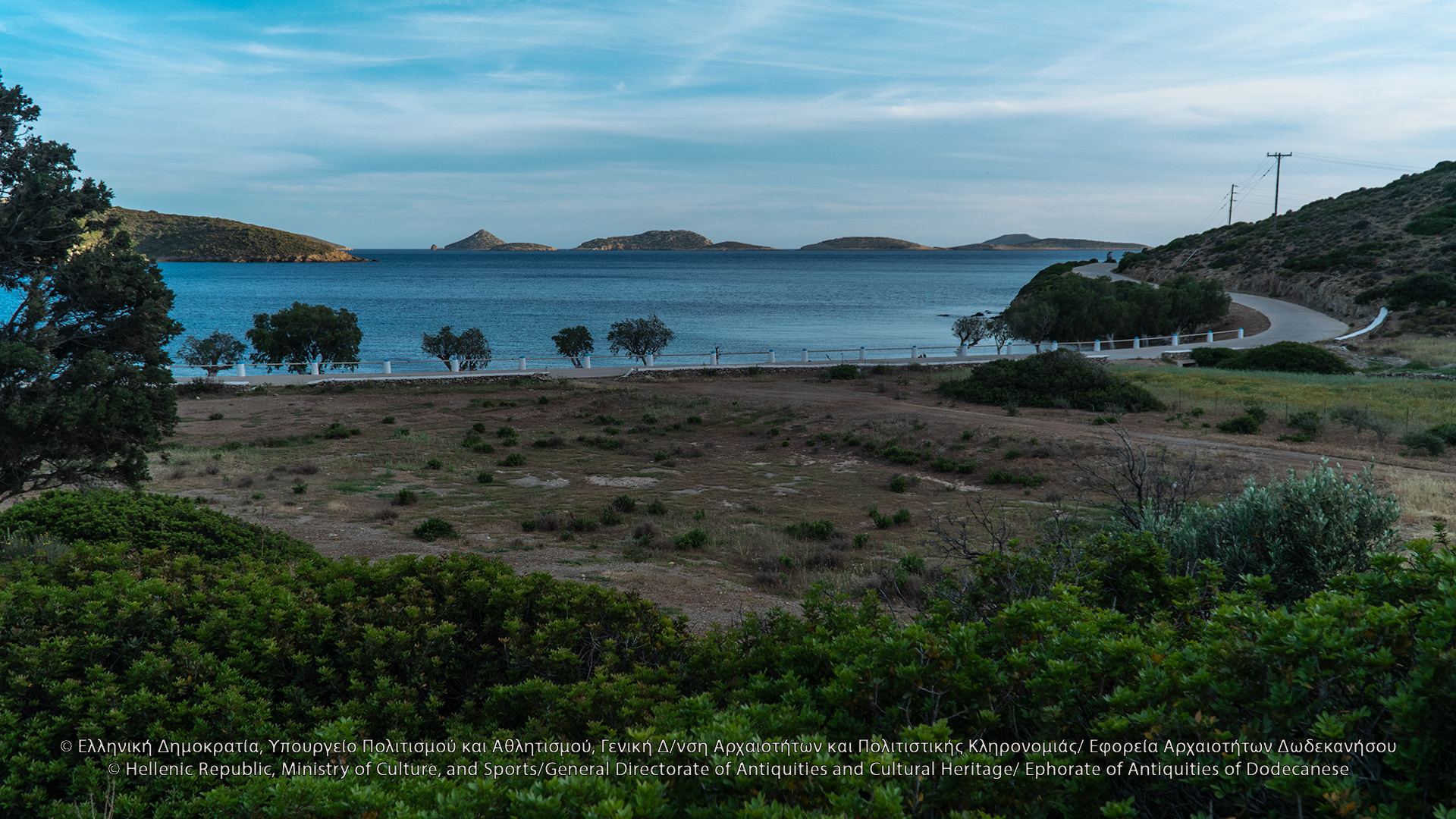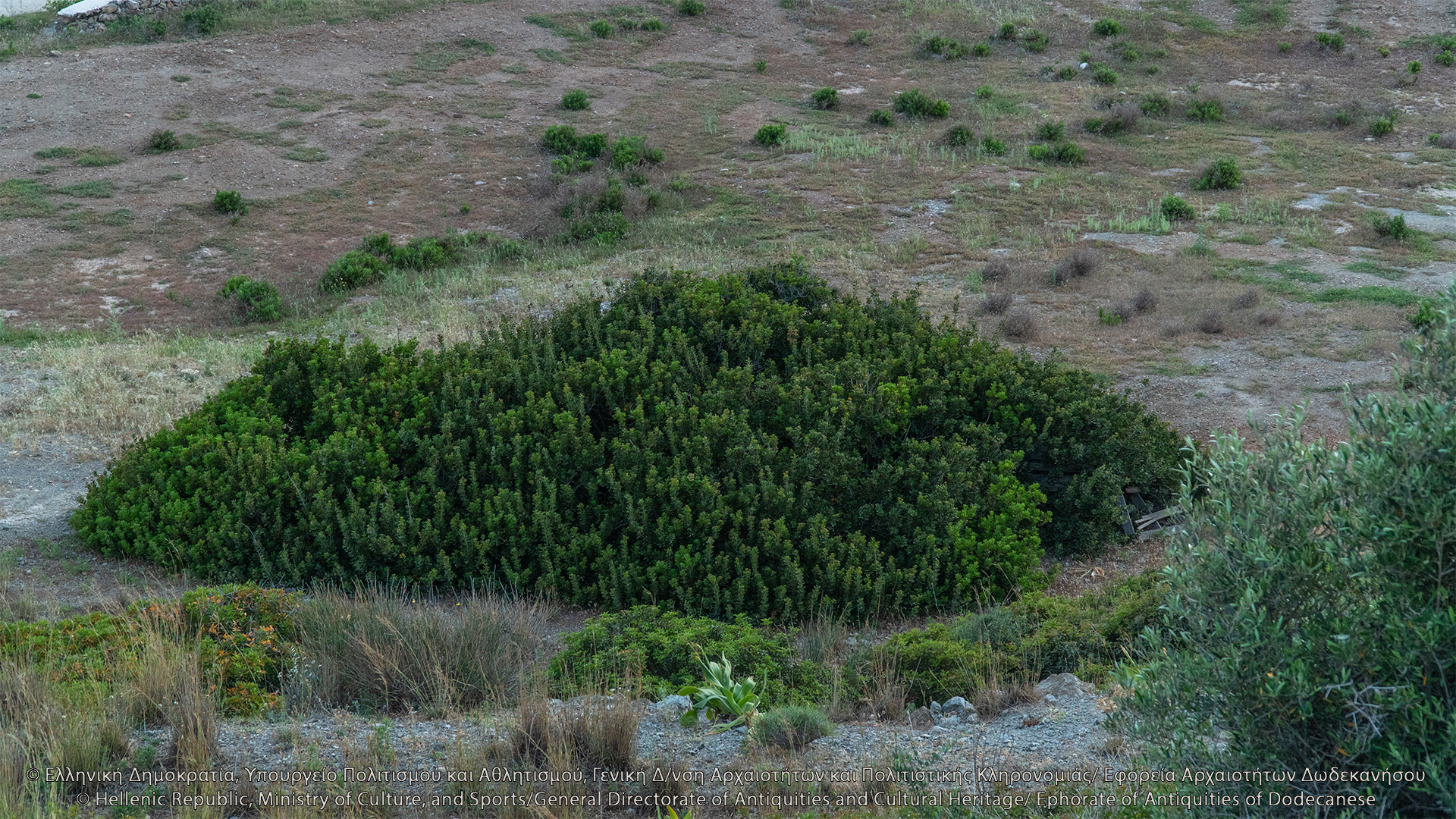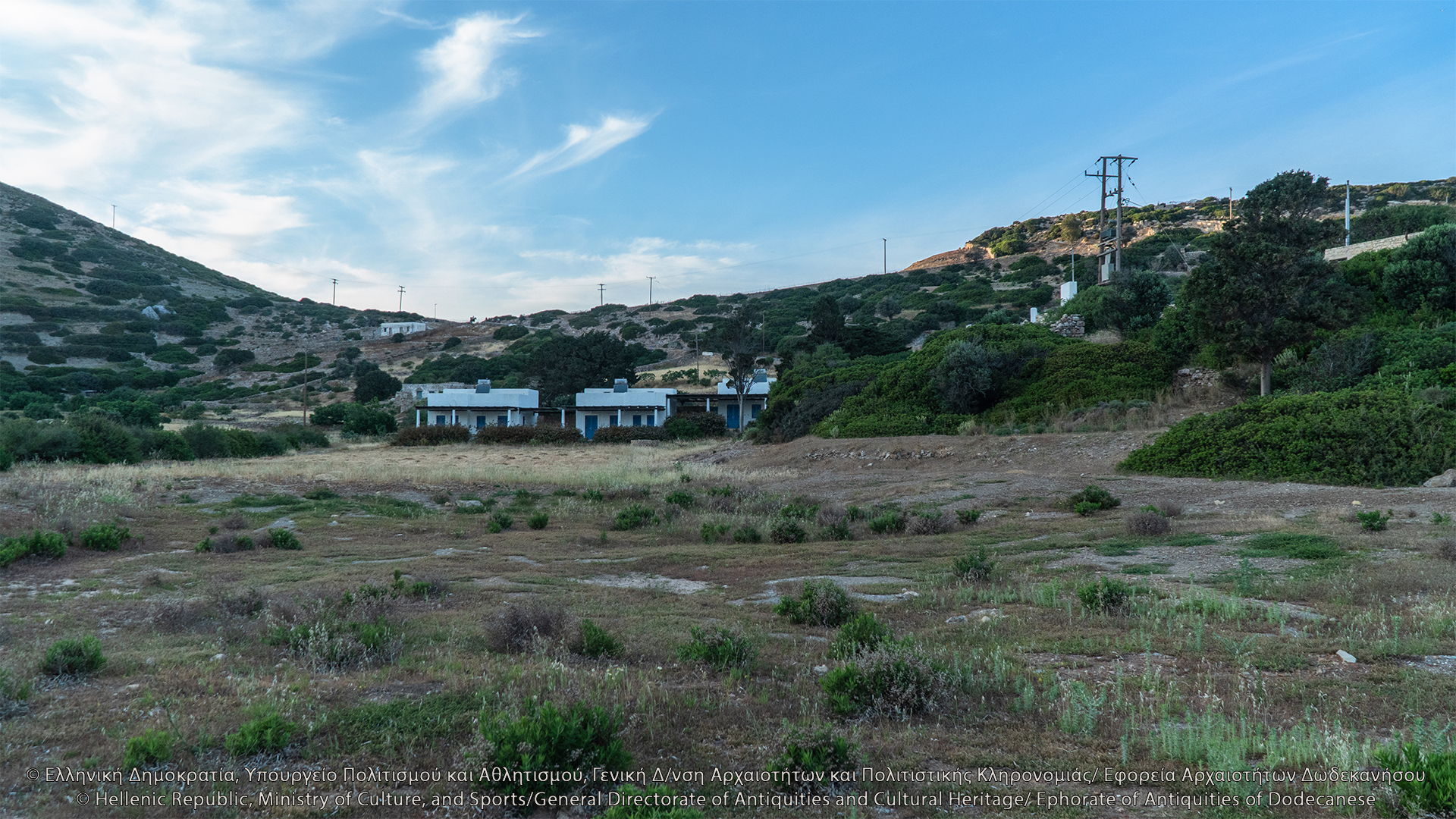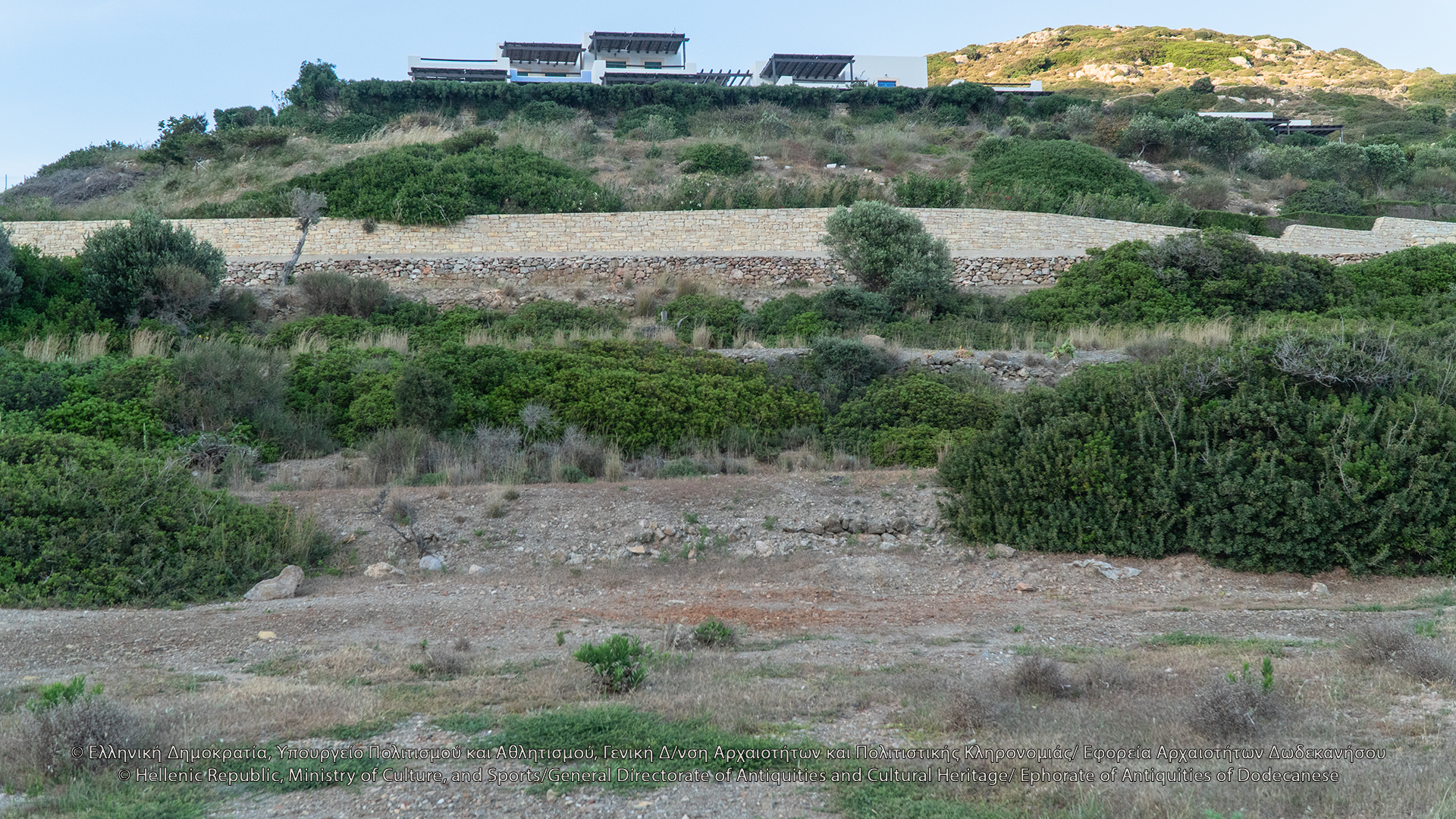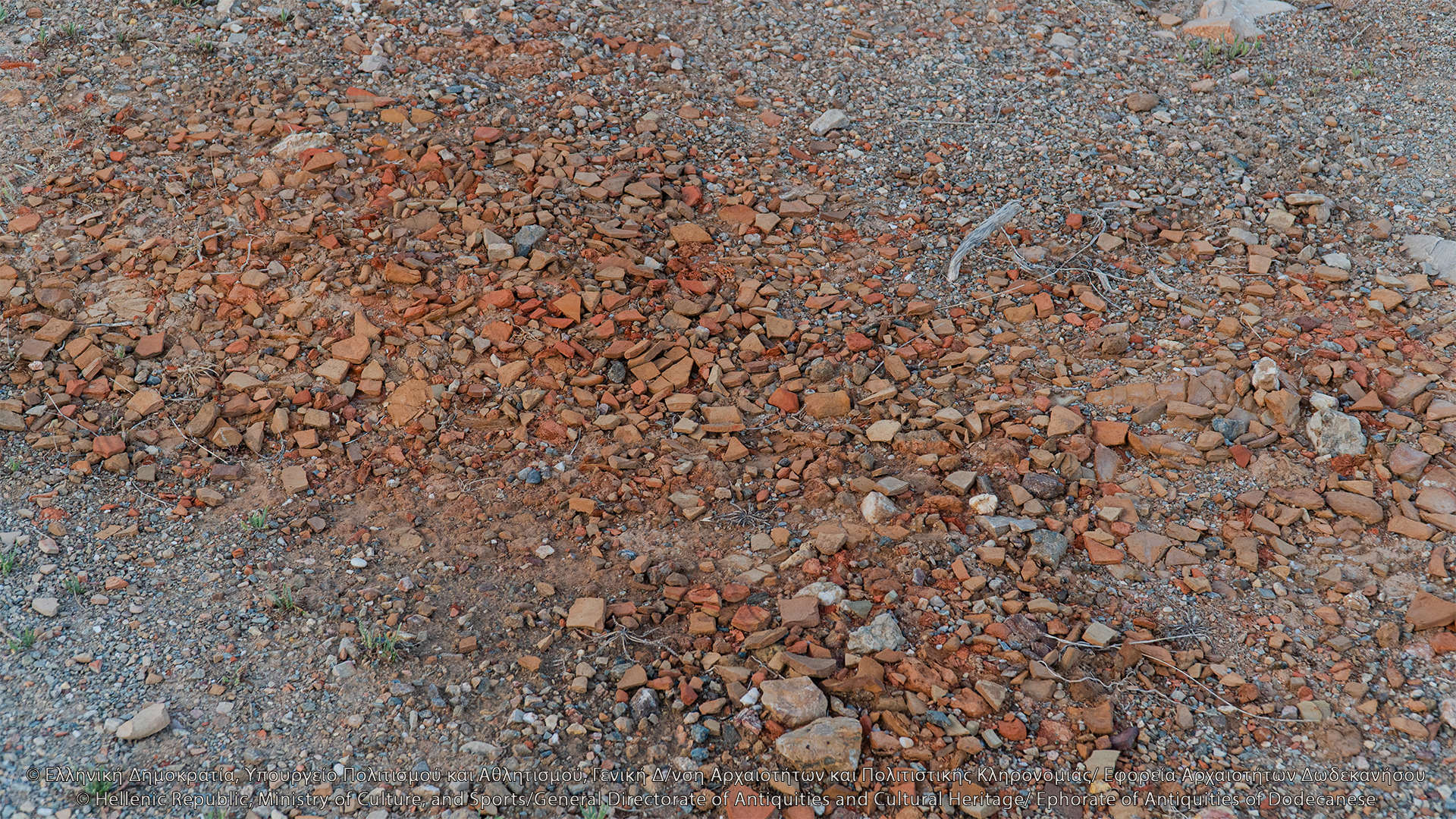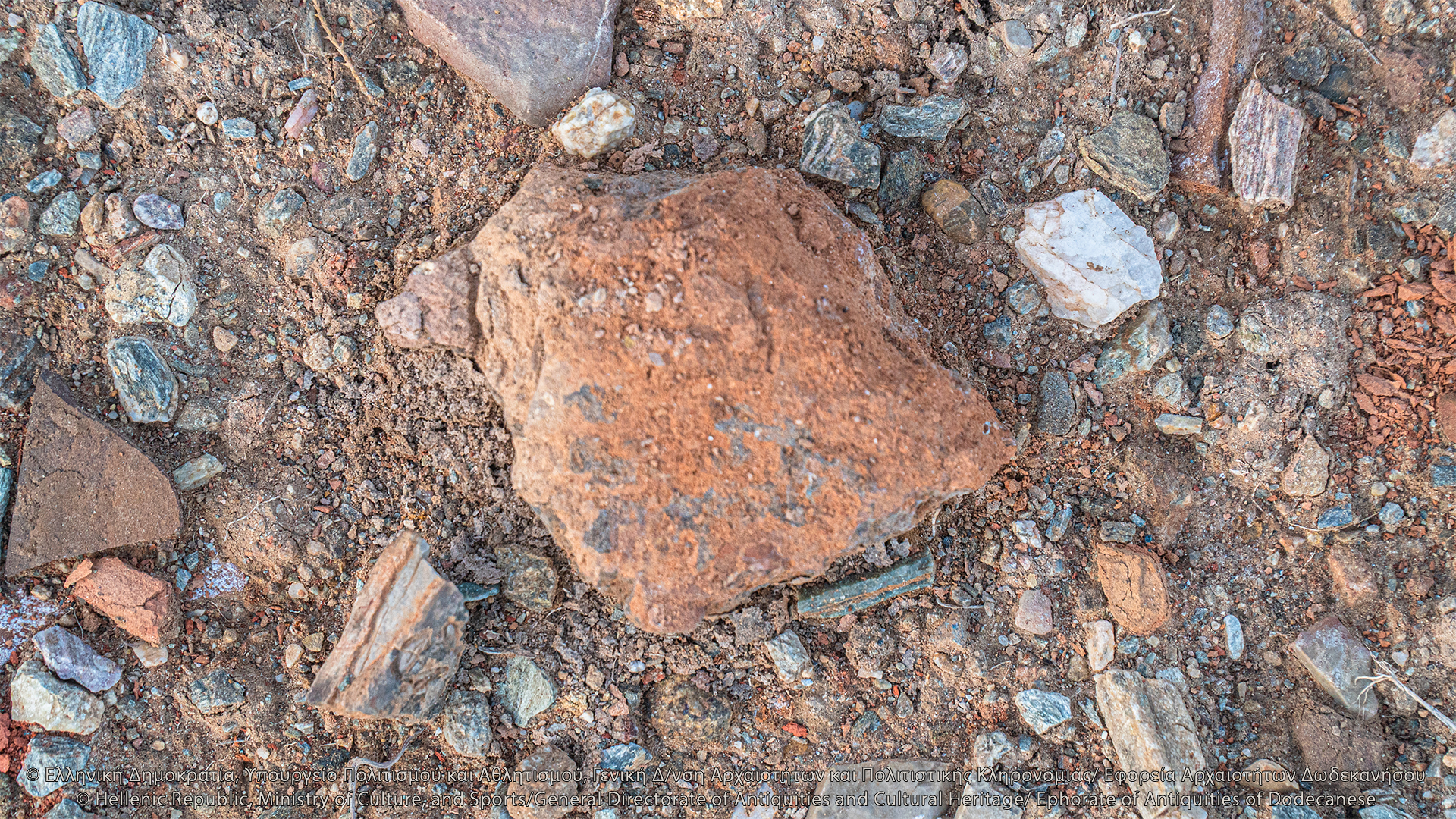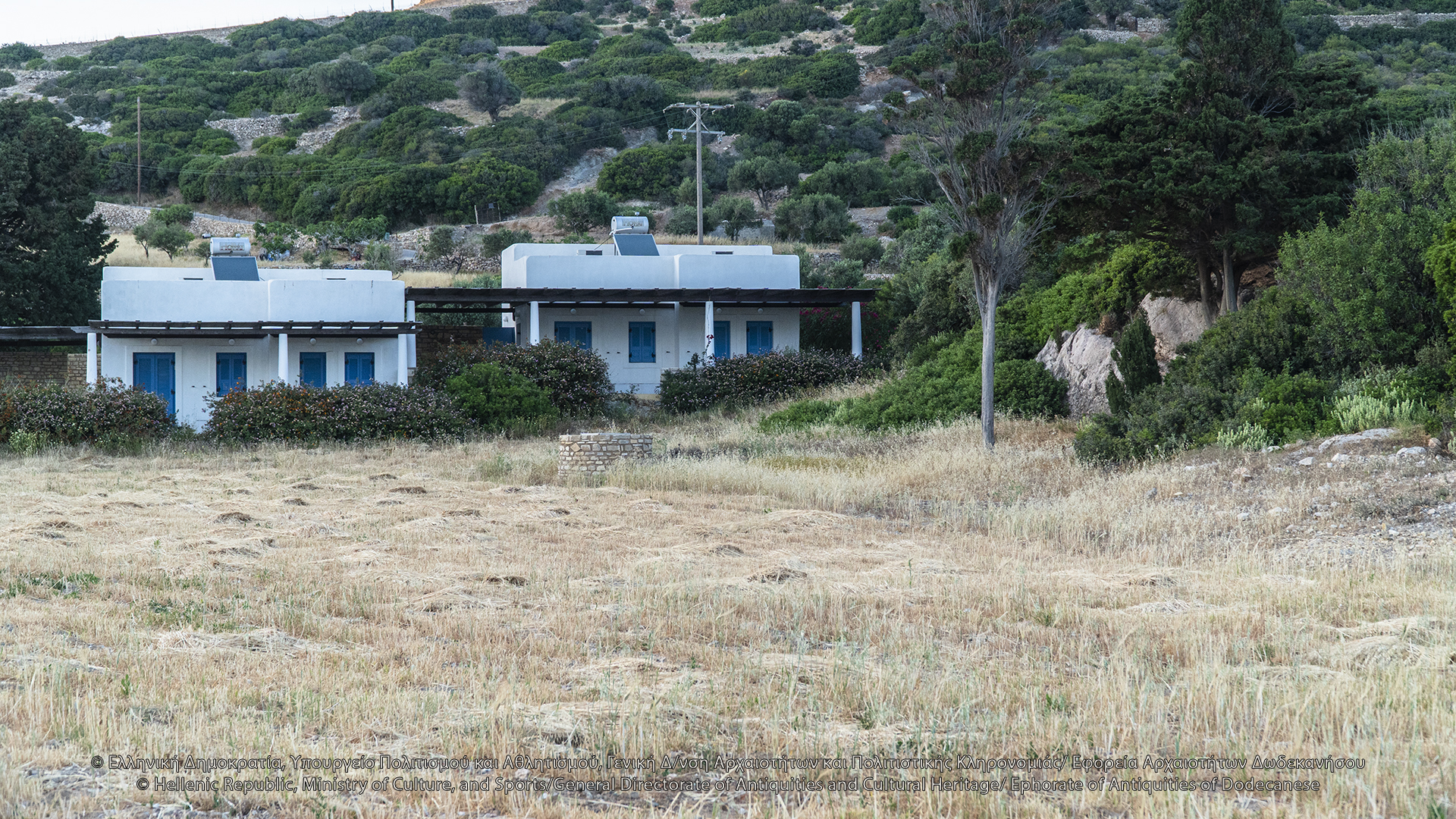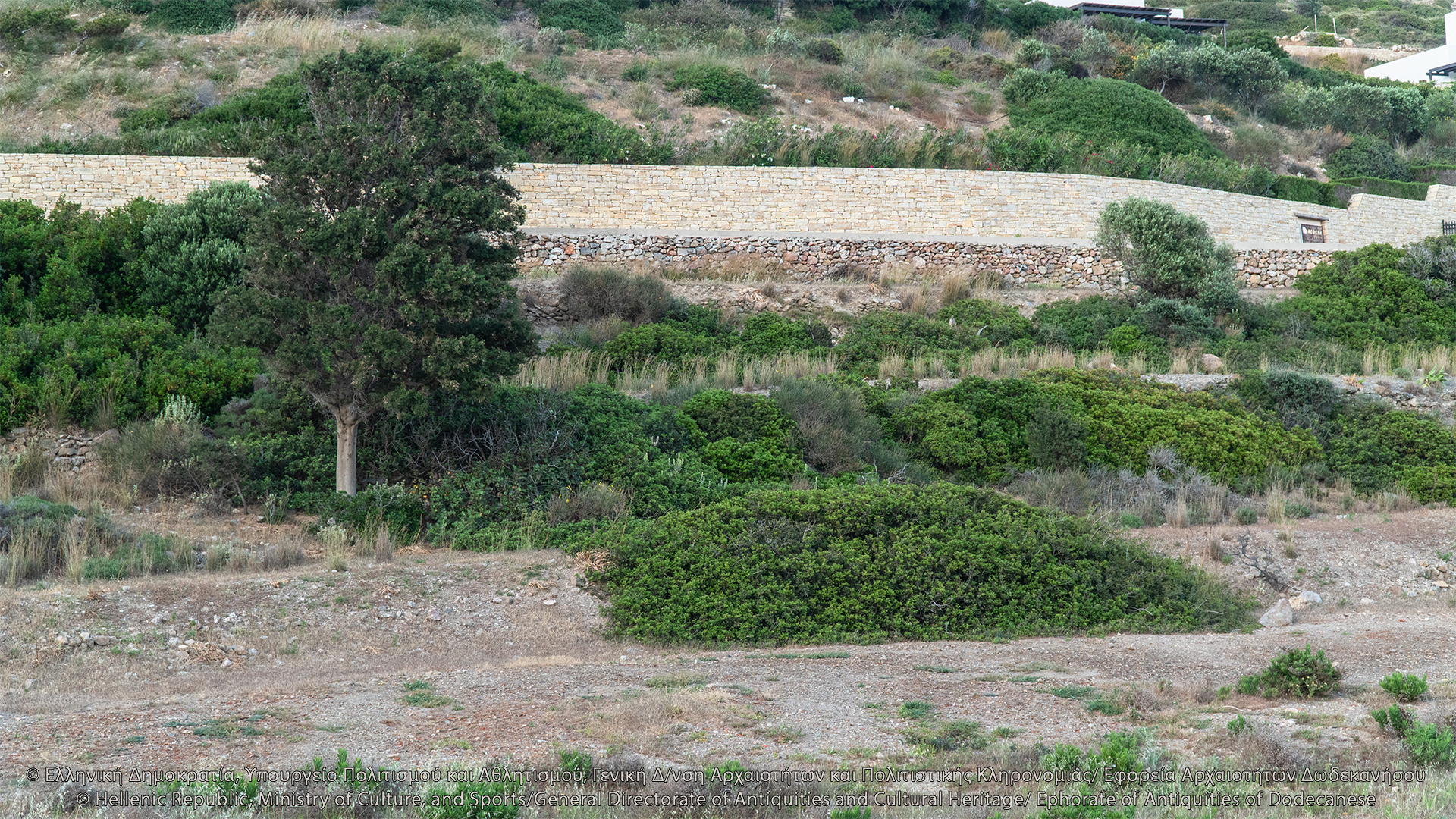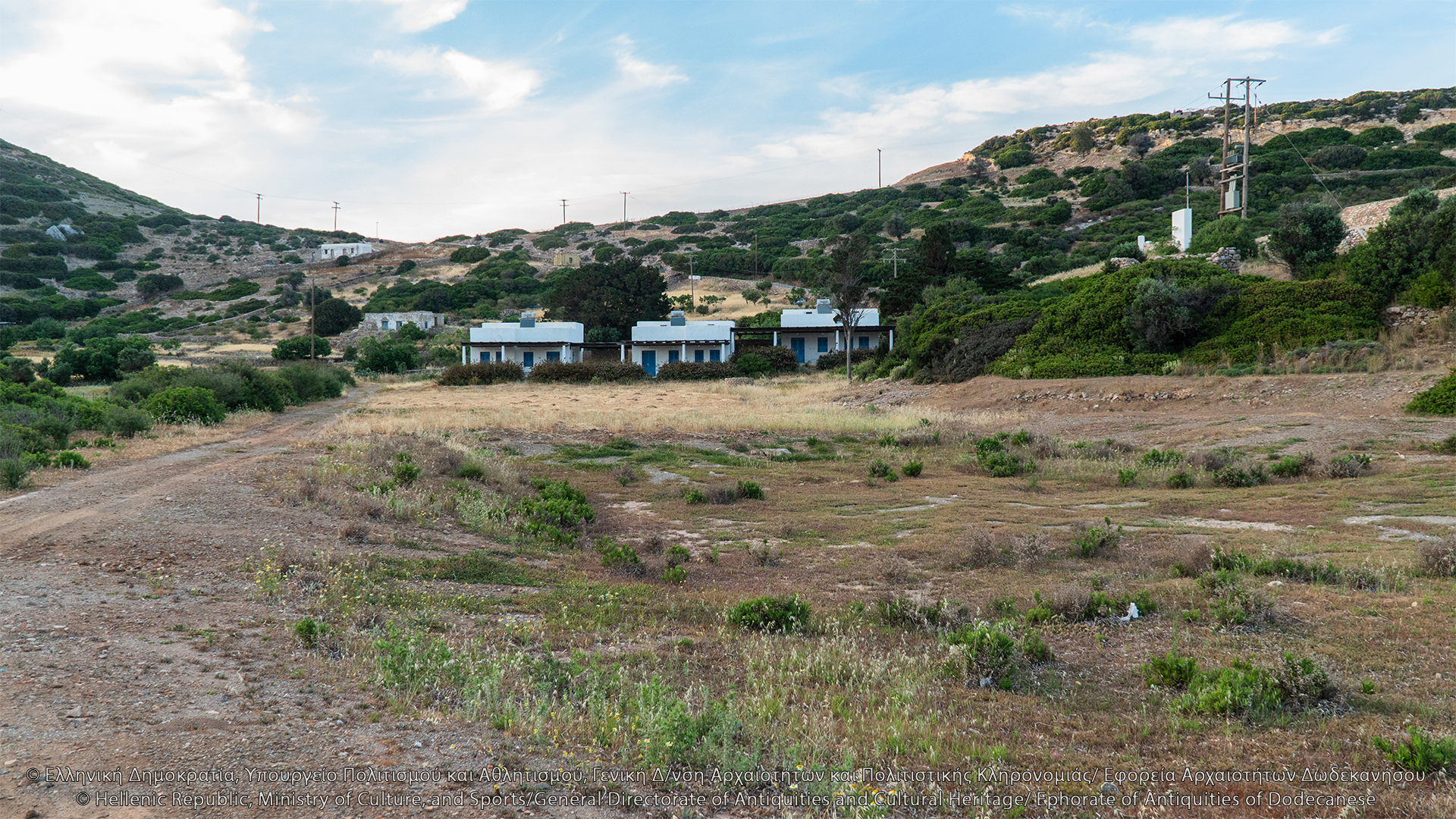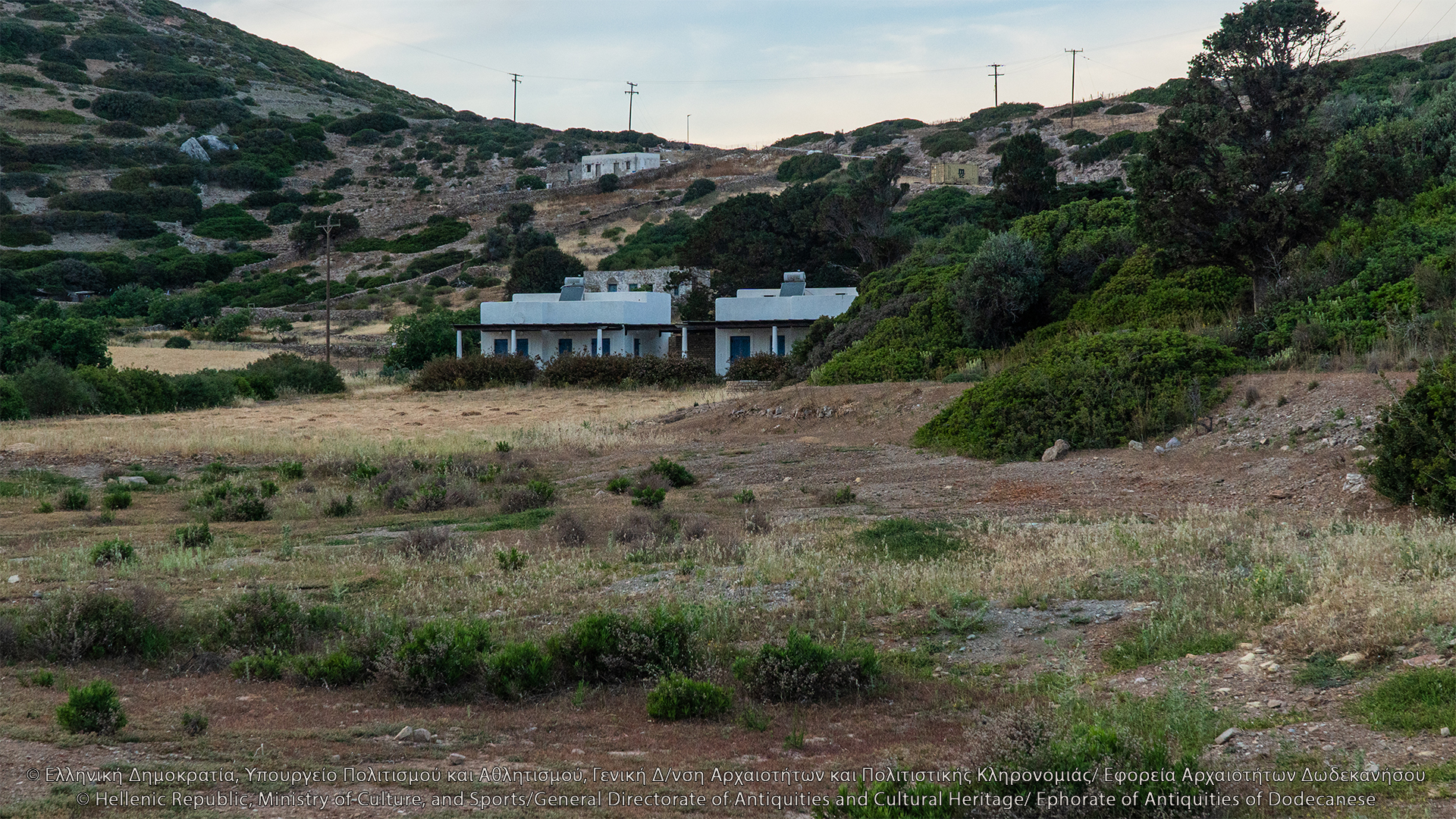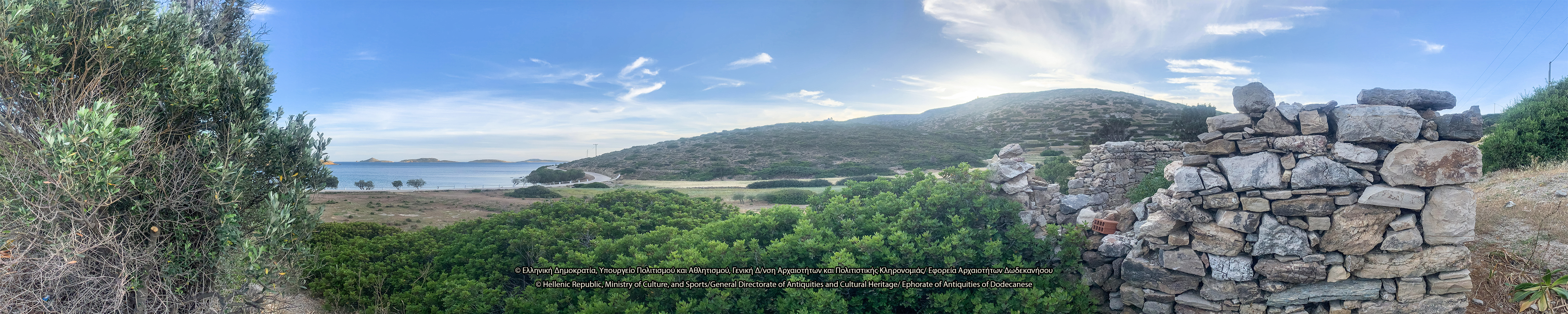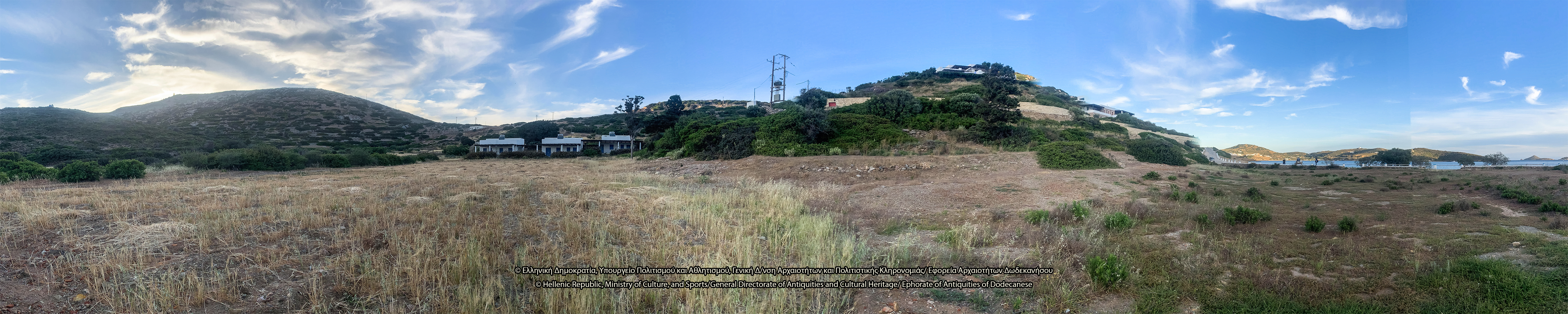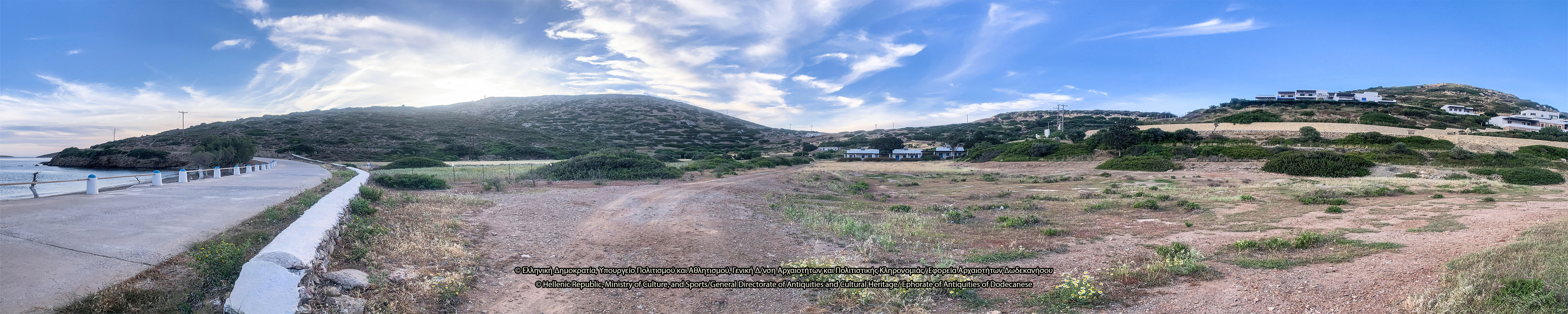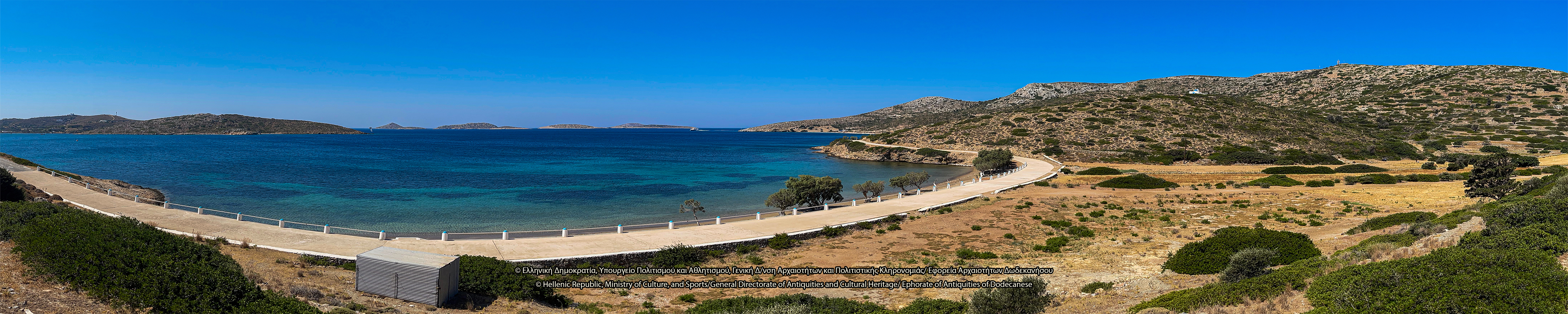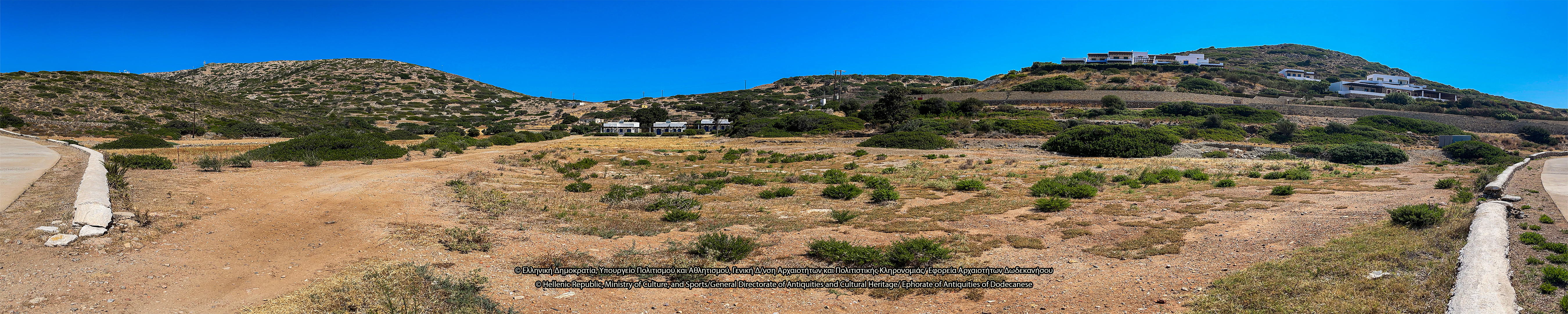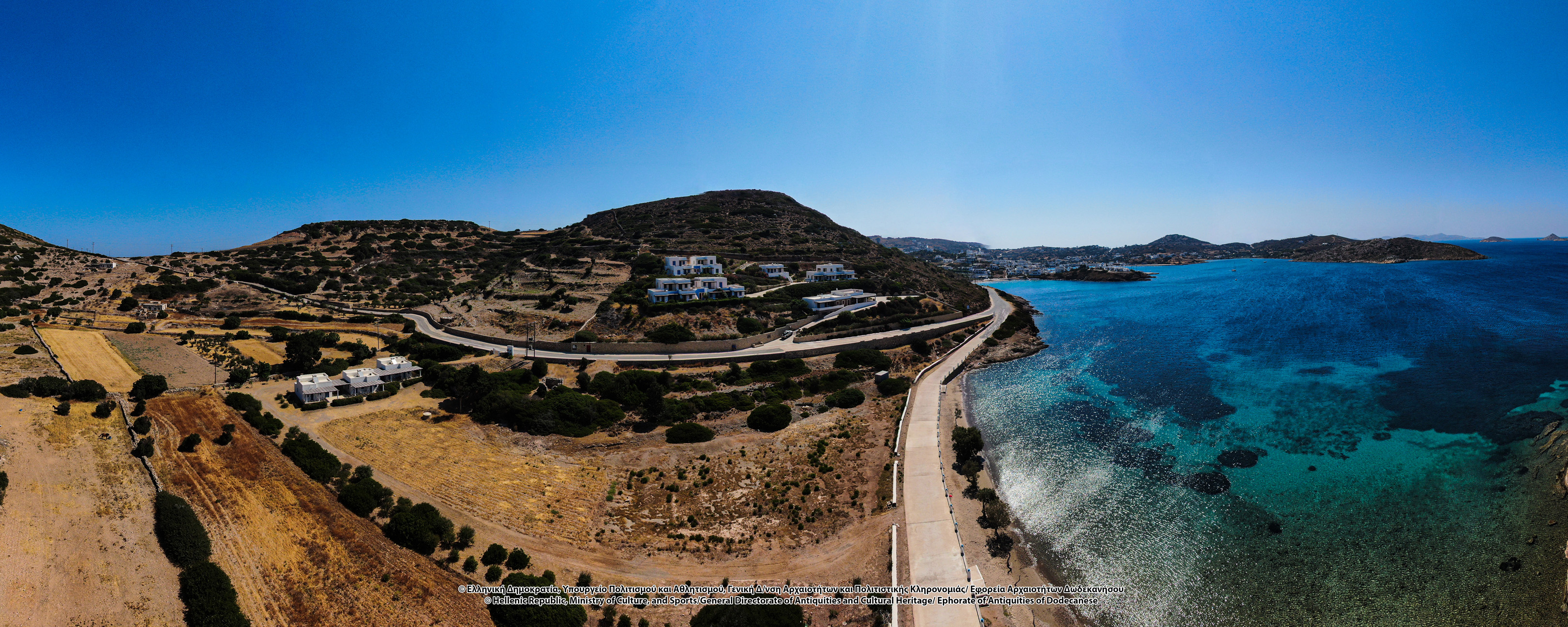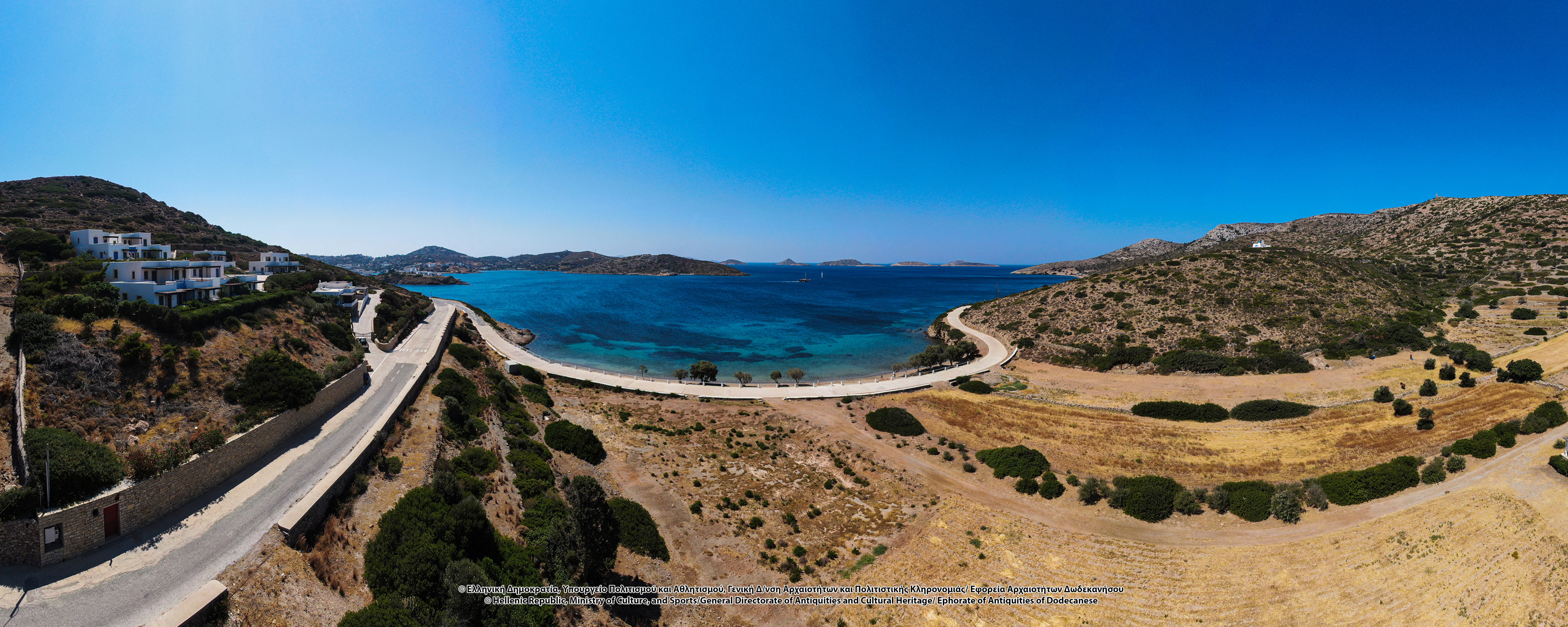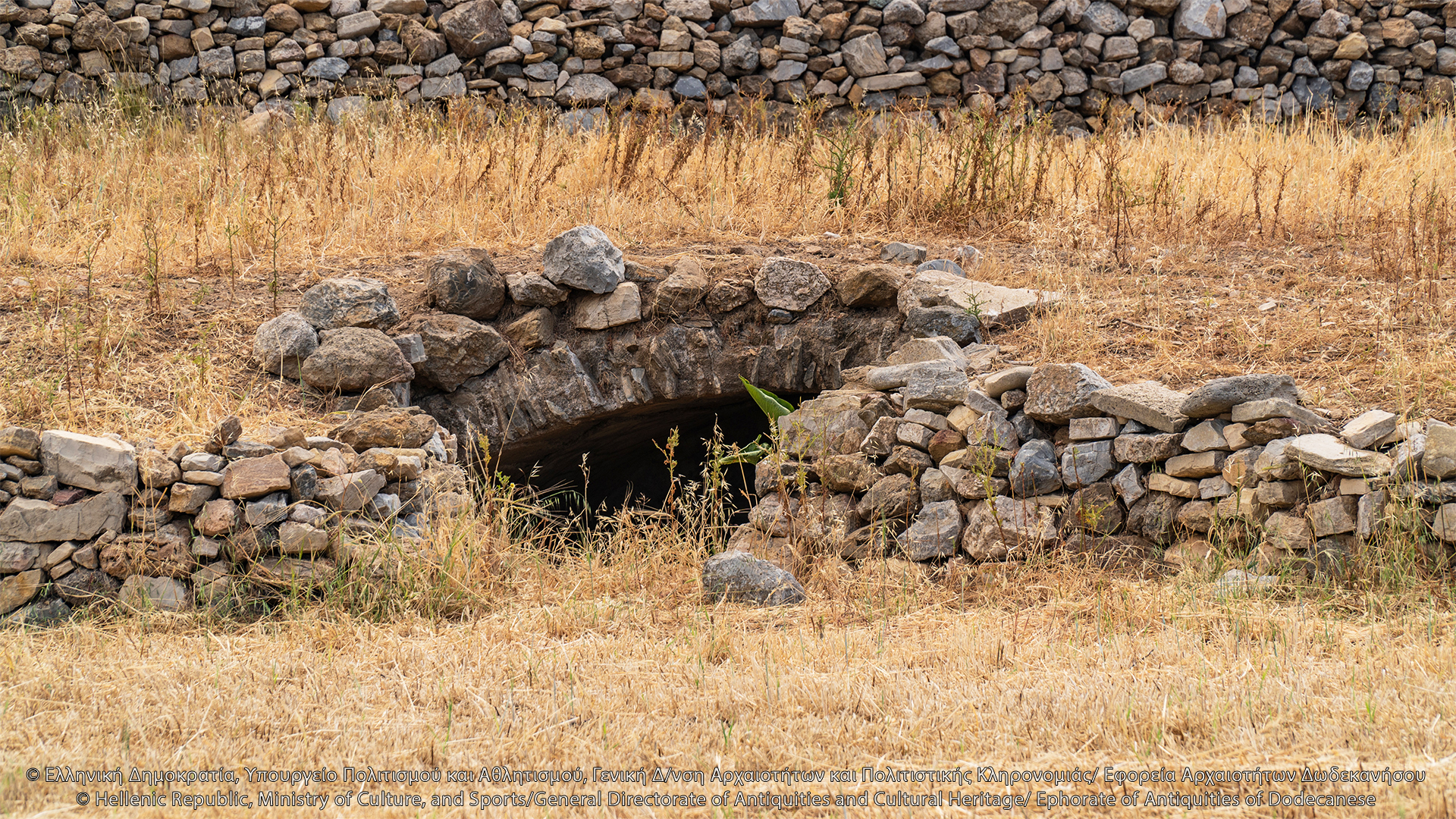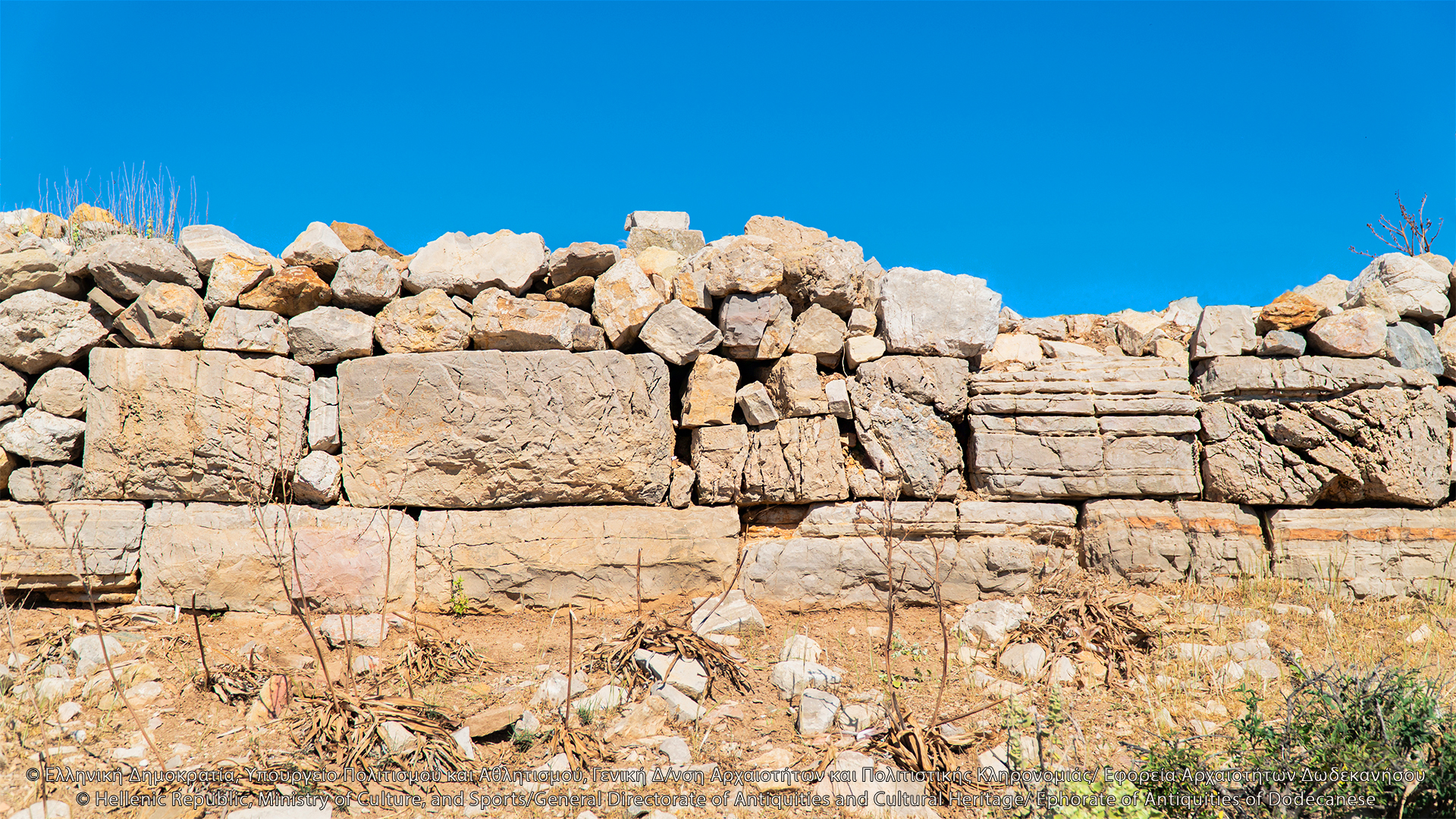
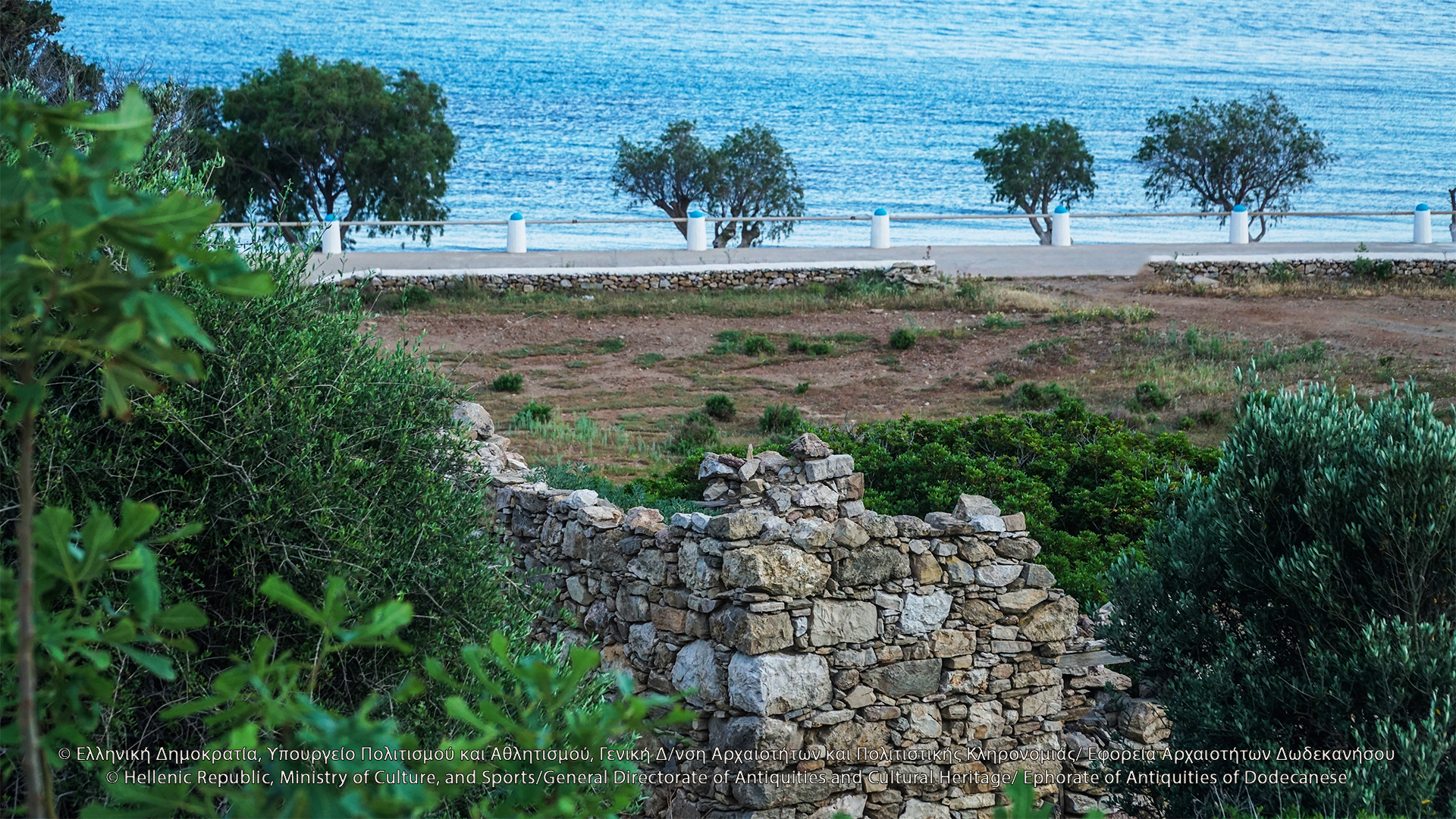
In the area of Kambos, northwest of the port of Lipsi, on a plot of 5,000 square meters owned by D. Colombini, an excavation carried out between 2008 and 2010 revealed the ruins of part of a workshop for the production of amphorae. The remnants of four square kilns, part of a floor and storerooms were revealed under a destruction layer. Each kiln was of different size and preserves the base of its walls, the chamber with the grid for firing the vases, the combustion chamber and the reject dump. Three of them look south.
The workshop produced medium-size commercial amphorae, cylindrical and two-handled, with characteristic horizontal ribbing on the body. The discovery of fifteen intact amphorae and numerous sherds indicates that they are imitations of Late Roman type 1 (LRA1) amphorae, widespread in the Aegean region. The installation was located by the sea, at the edge of the settlement, ensuring easy transfer to ships as a commodity. The installation is later than the 7th century, probably of the 8th century, a fact that led scholars to suspect a probable link to the military annual grain supply of this period. Τhe ruins have been partly filled as a protection from weathering.
Means of access:
Car, Pedestrian
Disabled access:
No
Opening hours:
Free
Entry fees:
Free